# Selective Land Clearing in North Port, FL
> Plan selective clearing around the canopy, privacy and shade you want to keep on your North Port property before choosing a machine. Plan your next step.
URL: https://gladenorthportlandclearing.com/selective-clearing/
Glade North Port Land Clearing
Open the ground. Keep the canopy.
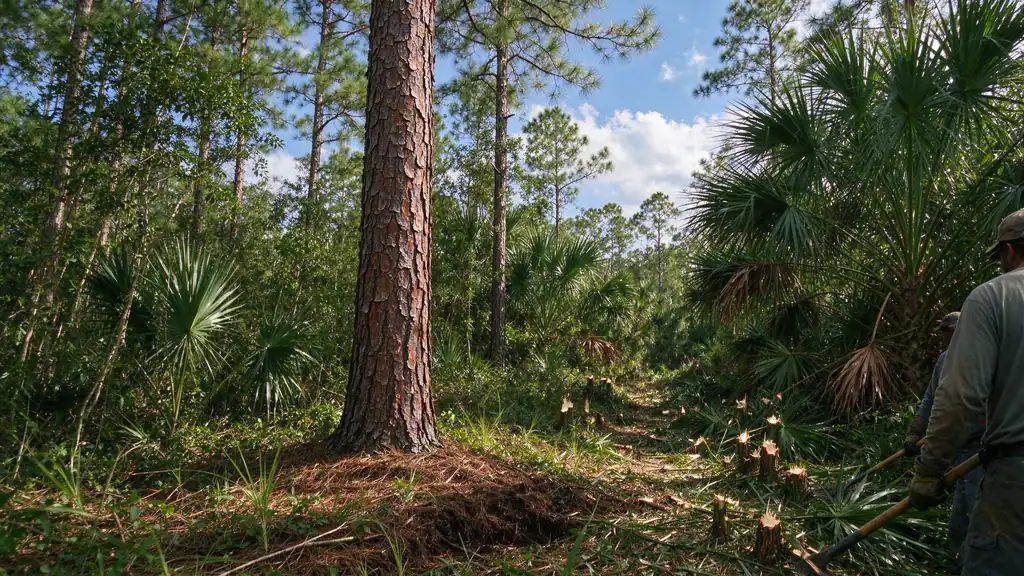 Selective clearing starts with what you want to keep. Perhaps you want a path to the back of the property without opening a view into the next yard, or more room around a future house while preserving a wooded edge. Removing the wrong strip of vegetation can defeat that purpose even if the finished area looks tidy.
[Glade](https://gladenorthportlandclearing.com/) offers selective land clearing in North Port for defined openings, retained trees and vegetation buffers. The useful first discussion is about the view, access and character you want afterward. Once those are clear, the removal method and working limits can be considered together.
## Walk the decision from the places you use
Think about what you can see from the porch, entrance, planned building or neighboring property line. A plant that looks unimportant from the road may provide much of the screening when viewed from a window. Marking the clearing from only one direction can produce a surprising result.
If the property is too overgrown to inspect safely, start with accessible viewpoints, available plans and photographs. An initial limited opening may provide information without committing the entire parcel to a final treatment. Do not enter dense vegetation merely to label every stem before requesting help.
For a remote owner, annotated photographs and a marked plan are useful together. Photographs show the visual goal; the plan helps distinguish location and boundaries. Neither establishes a survey line or confirms the identity of every plant. Leave uncertain areas unresolved until they can be assessed properly.
## Mark both the keepers and the limits of removal
A few ribbons around favorite trees are not enough if the rest of the instructions say “clear everything else.” Identify retained groups, buffer edges, access routes and areas where no decision has been made. A marking system should be agreed and understandable before equipment arrives.
| Marking decision | Why it matters |
|--------------------------------------|---------------------------------------------------------|
| Individual trees or plants to retain | Protects selected specimens within the opening |
| Continuous vegetation buffer | Preserves screening rather than leaving isolated trunks |
| Removal boundary | Limits cutting to the agreed area |
| No-travel and no-pile zones | Protects retained ground from secondary disturbance |
Where plant identification matters, obtain suitable advice instead of relying on color tape as proof of species. Desirable saplings can be easy to miss among faster growth. Marking them before cutting is more effective than trying to restore their place afterward.
## Design the corridor around its use
A walking path, maintenance lane and future construction route do not require the same width, overhead clearance or turning space. Tell us what needs to pass through and whether it must return along the same route. The smallest useful opening is often more protective of screening than a broad, unspecified strip.
A curved path may preserve privacy better than a straight line, but the turns still need to work for the intended equipment. Consider what happens at the end: a person can turn in a space where a machine or delivery vehicle cannot. The proposed corridor should solve the full access problem.
If the route follows a fence or property line, confirm the survey and access rights before requesting removal at the edge. [Fence line clearing](https://gladenorthportlandclearing.com/fence-line-clearing/) can address old wire, post conflicts and the working width needed beside a retained fence. It does not make the fence a legal boundary marker.
## Protect more than the visible trunks
Retaining a tree means accounting for the space around it, not simply avoiding a direct strike to the trunk. Equipment travel, repeated turning, excavation and material piles can affect the surrounding root area. A route chosen for convenience may work against the preservation goal.
For a valued mature tree, establish protection limits and identify where qualified arboricultural advice is needed. Do not assume one generic distance suits every tree or site. Its condition, root environment and nearby work can change what is appropriate.
The [retained-tree protection guide](https://gladenorthportlandclearing.com/guide/protecting-trees-during-clearing/) is useful when discussing machine routes, staging and handling. If the only available route would compromise a priority tree, reconsider the width, equipment or project sequence before treating removal as inevitable.
**Planning this work?** Describe the area, the finish and what should remain.
[Discuss your clearing scope](https://gladenorthportlandclearing.com/selective-clearing/#estimate)
## Separate unwanted plants from the vegetation holding the screen
Mixed growth needs a more careful decision than blanket cutting. An invasive shrub may sit beside a plant you want to retain, while a vine may cross several stems before reaching a tree canopy. Pulling or processing the visible mass without understanding what it is attached to can affect the wrong vegetation.
Identify whether the goal is immediate access, removal of a particular species or long-term control. Those are related but different outcomes. Initial cutting can open the area, while preventing regrowth may require follow-up identification and management beyond the clearing visit.
Where unwanted growth forms most of an existing privacy screen, removing it all at once may leave a larger opening than expected. Discuss phasing or a replacement planting plan with an appropriate landscape professional if keeping privacy is essential. Clearing alone does not supply a mature replacement screen.
## Choose the removal and debris route together
A machine may fit between trees on the way in but lack room to process material without contacting retained growth. Carrying branches out can also require a wider route than cutting them in place. Consider the path of both equipment and removed vegetation when setting the limits.
Possible finishes include cutting and gathering selected growth, processing suitable vegetation where material may remain or hauling specified debris away. [Brush clearing](https://gladenorthportlandclearing.com/brush-clearing/) can describe the lower-growth portion of the job, while larger or more constrained removals may need different handling. The method should follow the preservation plan.
If chips stay, specify where they can be distributed. If branches are piled, mark the pile zone and confirm it will not block access or affect valued trees. An opening can be cut correctly and still be unusable because the material was moved into the wrong place.
## Use a first section to confirm a subtle visual goal
Words such as “open,” “natural” and “clean” can mean different things to different people. If the choice is subjective and the project allows it, identify a representative section where the intended density can be confirmed before continuing. The aim is to agree on a repeatable finish, not to improvise a new scope throughout the day.
For phased work, keep a record of what was retained and why. A future visit should not treat previously protected screening as unfinished clearing. Photographs taken from the same safe viewpoints can help explain changes without implying a precise survey or environmental assessment.
## Confirm permissions for the selected work
Selective removal is still vegetation work. North Port’s [tree-removal guidance](https://www.northportfl.gov/Building-Planning/Natural-Resources/Tree-Removal-Arborist-Services) is the starting point for local tree questions, and the proposed species, parcel and work determine the appropriate review. Limiting the area does not automatically settle the requirements.
Wildlife, wetland and access questions can also affect a narrow project. Leave suspected burrows and unresolved sensitive areas undisturbed while obtaining appropriate guidance. Adjust the plan to the confirmed work limits rather than assuming all marked vegetation may be removed.
## Price the careful work, not just the area
Selective work can involve detailed marking, slower travel and separate material handling around retained features. Its price should not be compared with a broad clear-cut price on area alone. Ask what protection, cutting, processing, loading and cleanup the proposal actually includes.
[Request an estimate](https://gladenorthportlandclearing.com/contact/) with your North Port parcel location, the areas or views you want opened and the features you most want protected. Include safe photographs and the future use of each corridor. That gives the discussion a clear measure of success: useful access with the right vegetation still in place.
## What this work looks like
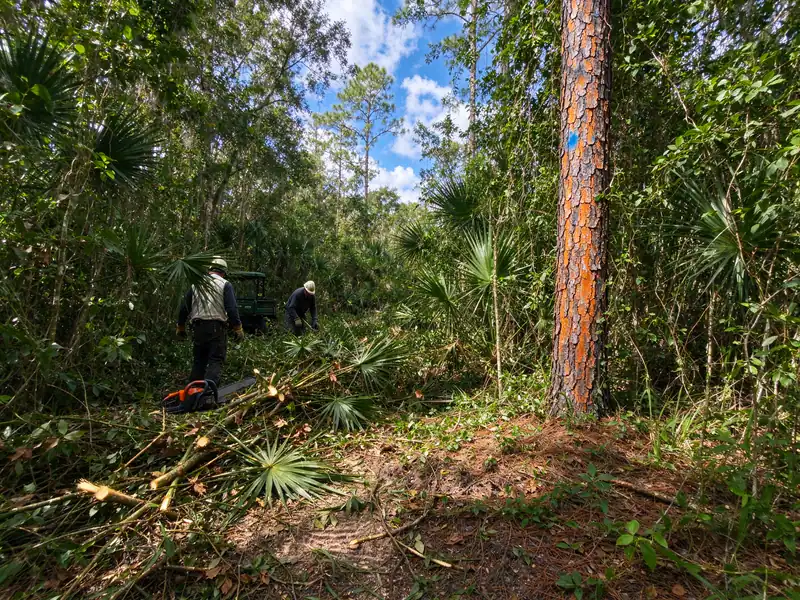 Marked pine kept at the edge of a narrow opening cut through dense understory
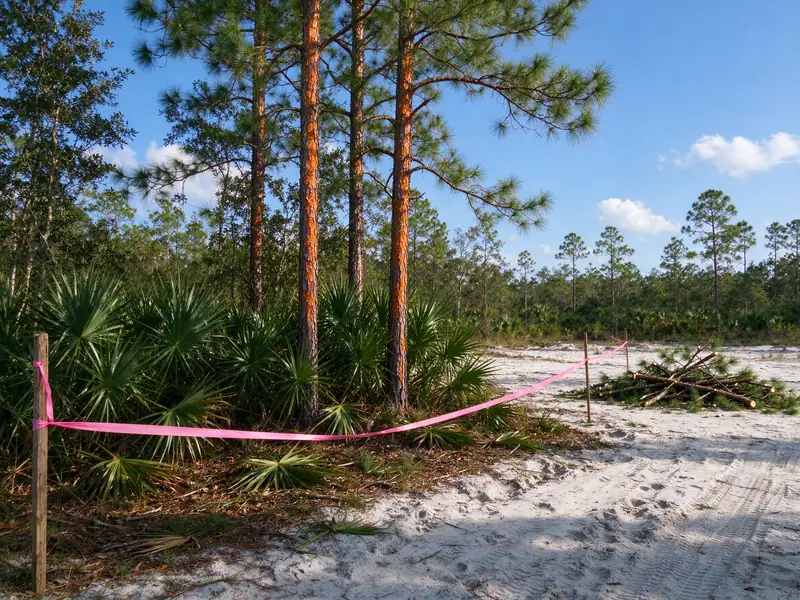 Ribbon line protecting a group of retained pines and palmetto beside cleared sand
## Questions about this work
### Do I mark the trees coming out or the ones staying?
Agree on both the marking system and the work boundary. Specify retained individuals, continuous buffers and unresolved areas so one ribbon color cannot be misread.
### Can I keep privacy while opening a path?
Often the route and sightline can be planned together. Describe the viewpoints you want screened and what needs to travel along the path.
### What if I cannot identify the plants I want to keep?
Mark them as unresolved and obtain appropriate identification before removal. A visual preference is useful, but it does not confirm a species or treatment.
### Should equipment drive beneath a retained canopy?
Do not assume that leaving the trunk untouched makes the route acceptable. Discuss root-area protection and obtain qualified advice when needed.
### Can the clearing be approved in sections?
A phased scope can help when the desired density is subtle. Define each phase, decision contact and acceptance point before work.
### Does selective removal include planting a new screen?
No planting should be assumed. If replacement screening is needed, make it a separate landscape decision and coordinate the timing.
### Can invasive shrubs be removed without losing the whole buffer?
That depends on how the plants are mixed and what provides the screening. Discuss identification, phasing and follow-up management.
### Where should chips go during selective clearing?
Identify acceptable distribution areas before processing. Keep material out of agreed protection zones, drainage features and the new access route.
### Can photographs alone establish my selective clearing line?
They can explain the visual goal but do not establish property boundaries or all site conditions. Pair them with plans and on-site confirmation where needed.
### Why can selective work cost more per area than broad clearing?
Marking, constrained movement and careful material handling can add effort. Compare the preservation and finish requirements, not only the size of the opening.
## Keep planning
- [What Changes Land Clearing Cost in North Port?](https://gladenorthportlandclearing.com/guide/clearing-cost/)
- [Gopher Tortoises Before Land Clearing](https://gladenorthportlandclearing.com/guide/gopher-tortoises-before-clearing/)
- [North Port Land Clearing Permits and Approvals](https://gladenorthportlandclearing.com/guide/land-clearing-permits-north-port/)
- [A Land Clearing Quote Checklist](https://gladenorthportlandclearing.com/guide/land-clearing-quote-checklist/)
- [Lot Clearing in North Port, FL](https://gladenorthportlandclearing.com/lot-clearing/)