Is heavy undergrowth still a mowing job?
Not necessarily. Woody stems, hidden obstacles and access can require an initial clearing scope before routine mowing is suitable.
Glade North Port Land Clearing
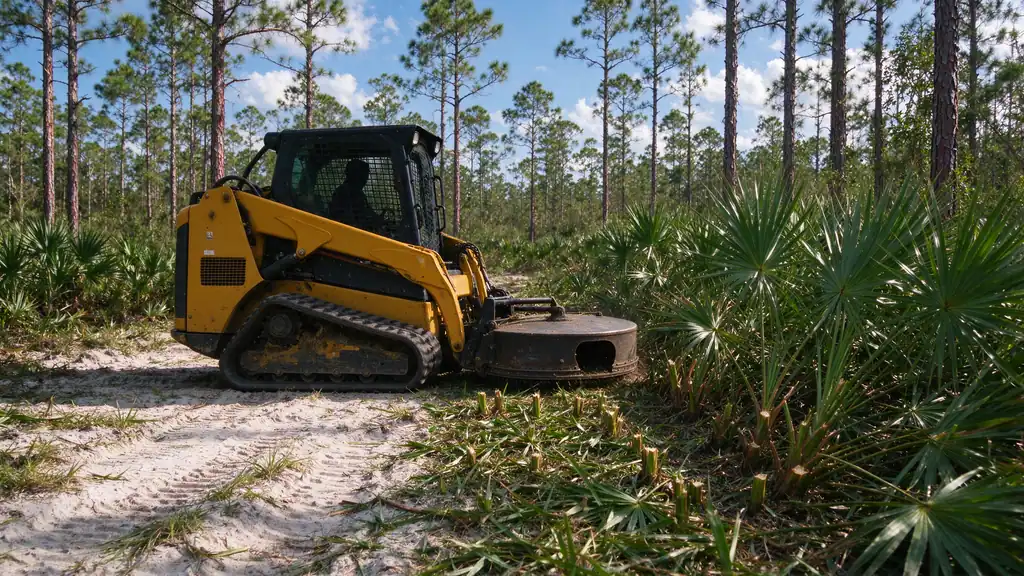
Brush can make a useful part of your property feel inaccessible long before the larger trees need attention. You may want to reach a rear boundary, see around a retained tree or recover an area that ordinary mowing no longer manages. The right brush-clearing scope opens that space without automatically stripping the whole lot.
Glade offers brush clearing in North Port for agreed areas of undergrowth, woody shrubs and suitable smaller vegetation. Start with the access or maintenance problem you want solved. That makes it easier to decide what should be cut, what should stay and what finish is useful afterward.
Ordinary mowing assumes the equipment can travel through the area and handle what it encounters. Dense brush, woody stems, tangled vines, concealed stumps and discarded materials can change that assumption. An overgrown area may need assessment and initial clearing before it can become a regular mowing task.
Brush clearing does not have to mean removing mature trees. It can focus on the lower vegetation while retaining a canopy, opening selected sightlines or improving access around the property. The difference should be explicit because “clean up the lot” gives too little guidance about which plants are valuable to you.
Safe photographs can show whether the area is mainly low growth, dense woody shrubs, saplings or tangled vegetation around existing trees. Include both a wide view and a representative close view from somewhere accessible. Do not push through the brush simply to obtain a picture.
Mention old fences, dumped materials, previous structures and places where footing disappears beneath the growth. A brush mower or cutting attachment is intended for suitable vegetation, not unknown rubbish. Hidden obstacles may require a separate pass to identify and remove before powered cutting can continue.
A whole-property clearing plan may be unnecessary when your immediate need is a usable corridor or a maintained edge. Mark the area that serves the goal and identify vegetation outside that boundary that should remain untouched. A smaller defined opening can preserve privacy and reduce the area you need to maintain later.
If your plan includes a fence, building or driveway, obtain the next trade’s working-room requirements. A strip that looks wide enough to walk through may be too narrow for construction access. Conversely, clearing more width than the project needs can remove screening you would have preferred to keep.
Use fence line and access clearing when the work centers on a perimeter or route. That conversation includes the line, turning space and old fence conflicts instead of treating the corridor as a simple patch of brush.
| Approach | Typical decision | Finish to clarify |
|---|---|---|
| Cut suitable low vegetation | Open the area for inspection or maintenance | Cut stems, loose growth and follow-up mowing needs |
| Process suitable woody growth | Reduce material where it can remain on site | Mulch texture, residual stumps and distribution |
| Cut and gather material | Keep branches and brush out of the opening | Loading, haul-off and the final surface |
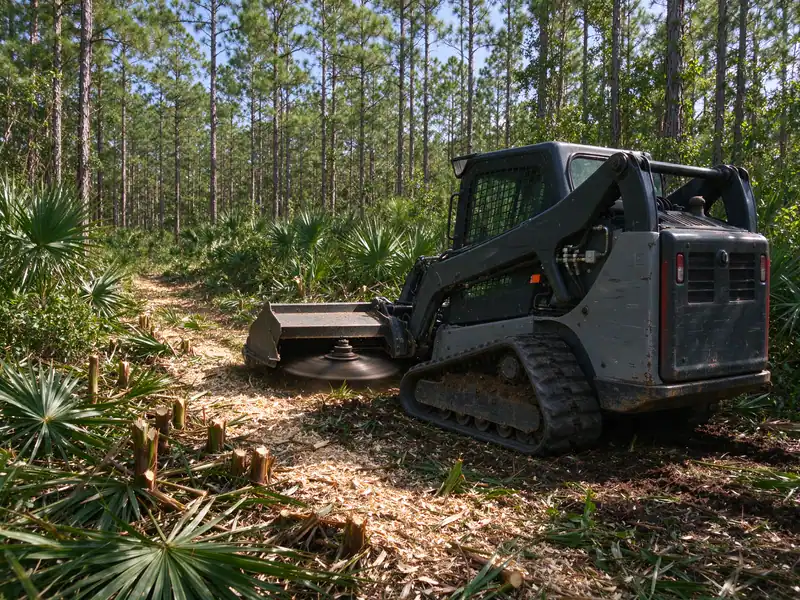
The same property may need more than one approach. A tracked carrier with a suitable brush attachment may fit an open area, while constrained work near wanted plants can require a more selective method. Equipment should suit the access and vegetation rather than determine the scope by itself.
If forestry mulching is proposed, ask what size and type of material the planned equipment can handle under the actual site conditions. Processing vegetation does not remove every root or create a level soil surface. If roots conflict with a future use, address them separately.
A skid steer with a brush mower can cut suitable low vegetation where the gate, turning area and ground support allow it to operate. If stems become too heavy for that attachment, ask which pieces require a separate cutting or handling method.
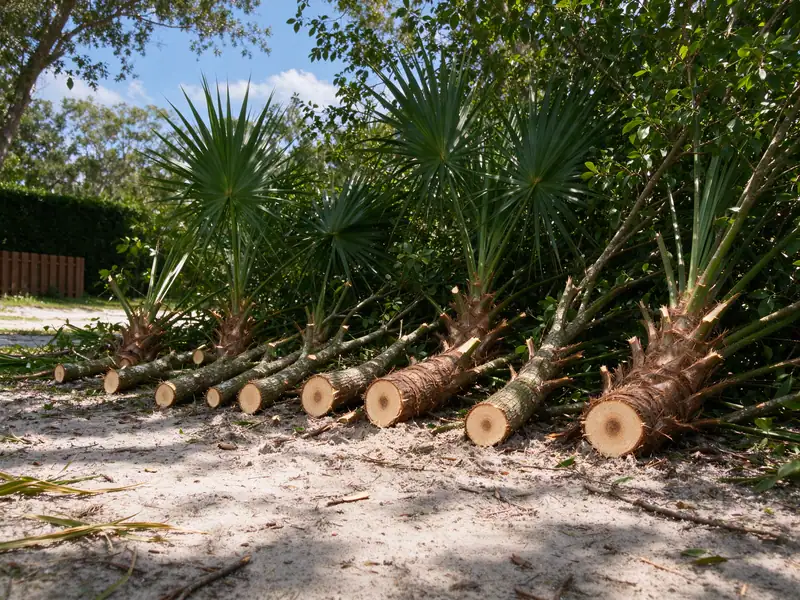
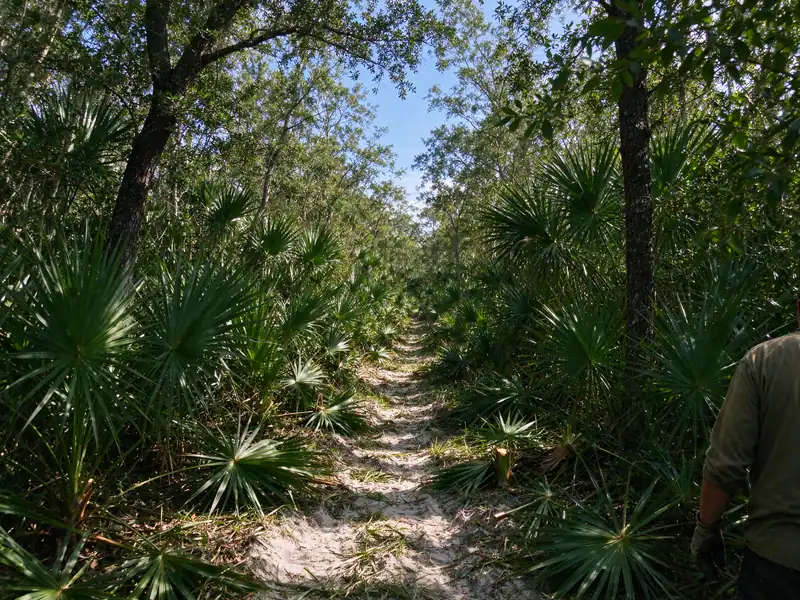
Vegetation is not interchangeable. A mass of palmetto, woody shrubs and vines may look like one continuous obstacle, but clearing it involves decisions about what gets cut, what can be processed and what may return. Identification matters when the objective includes keeping particular native plants or controlling unwanted species.
Tangled vines can conceal their support and attachment points. A vine running into a retained tree or fence should not be treated as if it were lying loose on the ground. Explain the objects you want protected so the method accounts for the way the growth is connected.
Cutting invasive vegetation is not a guarantee of lasting control. Some plants can regrow after a first clearing, and ongoing management can require a different treatment from the initial opening. Use the Brazilian pepper regrowth guide when that species is suspected, and resolve identification before assuming one treatment suits everything.
Planning this work? Describe the area, the finish and what should remain.
Discuss your clearing scopeMark desirable saplings as well as large trees. When small plants are mixed into dense growth, an operator cannot safely infer your preferences from appearance alone. A clear keep-and-remove plan is more useful than a general request to make the area look natural.
The route to the brush matters too. Equipment may need to pass retained trunks, shallow roots, planting beds or irrigation. Protecting those features can change the width of the opening, the attachment used and the amount of material handled manually. Mention them when requesting the estimate, not after machinery has been scheduled.
Where preserving a wooded character is the main objective, selective clearing may better describe the project. It puts the retained vegetation and working limits at the center of the scope rather than treating them as incidental obstacles.
A newly opened area can still have stubs, roots, chips and uneven ground. Decide whether that is acceptable for inspection, walking or maintenance. Lawn preparation, grading and construction-ready ground are separate results and should not be implied by the phrase “brush removed.”
If material is collected, identify the pile location or haul-off requirement. A pile left beside the route can block the very access the clearing was intended to provide. If material stays spread on site, agree where it can be placed and what finished thickness or texture is acceptable for the intended use.
For stumps that remain a specific obstruction, discuss stump and root removal. Not every stump needs extraction, but the ones that conflict with the next use should be identified rather than buried under the general cleanup description.
North Port’s tree-removal guidance is relevant when proposed brush work includes regulated vegetation or trees. Calling a project underbrush removal does not settle its authorization. Confirm the actual work and parcel conditions before assuming a particular method is exempt.
Keep suspected wildlife burrows and unresolved wet areas undisturbed while obtaining appropriate guidance. Dense vegetation can hide these conditions. An estimate based on photographs should not be read as confirmation that all environmental questions have been answered.
Think about who will maintain the opening and what equipment they can use. A broad irregular area may be harder to maintain than a smaller route with a clear edge. Consider access for future visits and the treatment of growth returning from adjoining areas.
Ask the proposal to distinguish initial cutting, material handling and any future visits. Maintaining cleared land is an ongoing decision, not a result that one clearing visit can promise indefinitely. Set a practical inspection routine based on the vegetation and your use of the space.
The main price drivers include density, stem size, hidden obstacles, retained plants, access and material handling. Area alone does not describe them. Two openings of the same size can take different approaches if one is open brush and the other is woven through a fence and mature trees.
Contact Glade with the location, approximate area, safe photographs and the access or maintenance result you want. Tell us whether the debris can stay and what must be retained. A clear finish helps compare proposals and avoids paying for an opening that still does not serve your intended use.
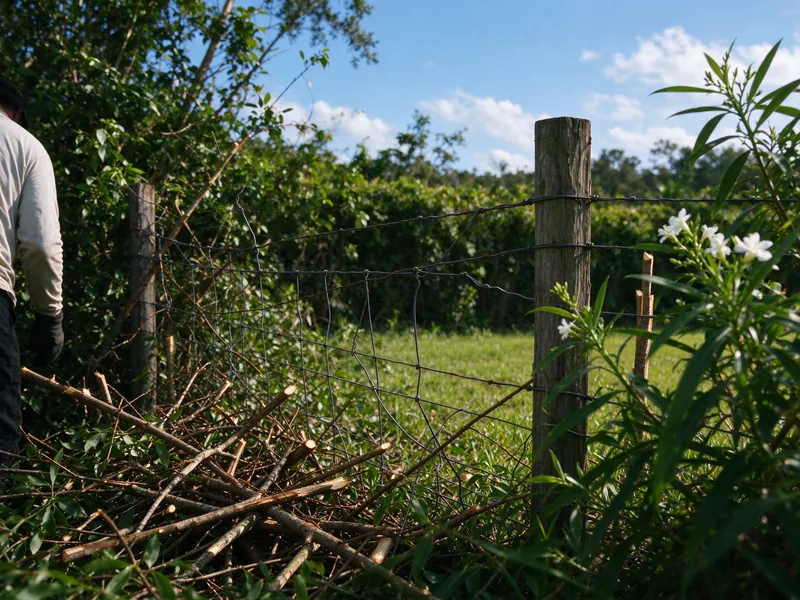
Not necessarily. Woody stems, hidden obstacles and access can require an initial clearing scope before routine mowing is suitable.
That can be the proposed scope. Mark retained trees and smaller desirable plants, and account for equipment routes around them.
Yes. Explain which plants and areas should stay. Do not assume all vegetation of a particular size will be treated the same way.
A first cutting is not a promise of eradication. Identification and a suitable follow-up management plan are separate parts of the decision.
Disclose the lines and other known infrastructure before work. Their locations and the working room can affect the method and excluded areas.
Only when specified. Cutting, processing, piling and hauling leave different results and should be described separately.
Identify the fence as a retained feature and explain any known damage. Vegetation removal and fence repair are different scopes.
Yes. A marked access or maintenance area may meet your immediate need while retaining screening and limiting future maintenance.
Not automatically. Residual material, stumps and soil preparation can remain. A lawn-ready finish needs separate requirements.
Compare the same boundary, retained vegetation, residual finish and material handling. A lower price may describe less work rather than the same result.
Discuss the clearing scope
Describe the result you need, the work boundary and the features to retain.