Forestry mulching can make an overgrown property easier to see and use without hauling every branch away. It is most useful when you want to manage vegetation and can accept a layer of processed wood on the ground. If your next step is a foundation, driveway or finished lawn, that same surface may need more work.
Glade offers forestry mulching in North Port as a defined clearing method, with the area, vegetation and finish agreed before work. Tell us what you want to do with the opening. Choosing the machine comes after deciding what can remain above and below the surface.
Start with the finish you can live with
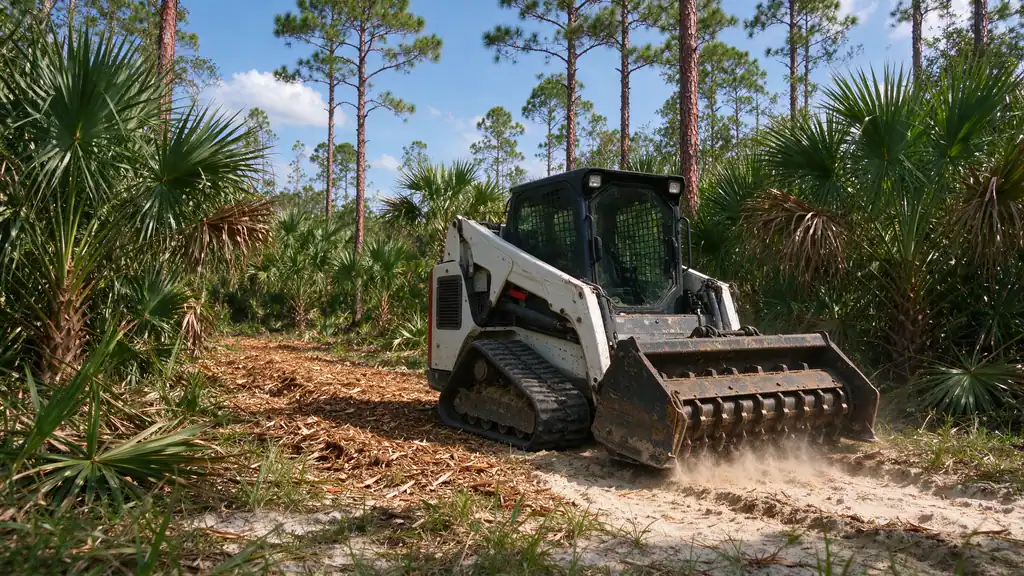
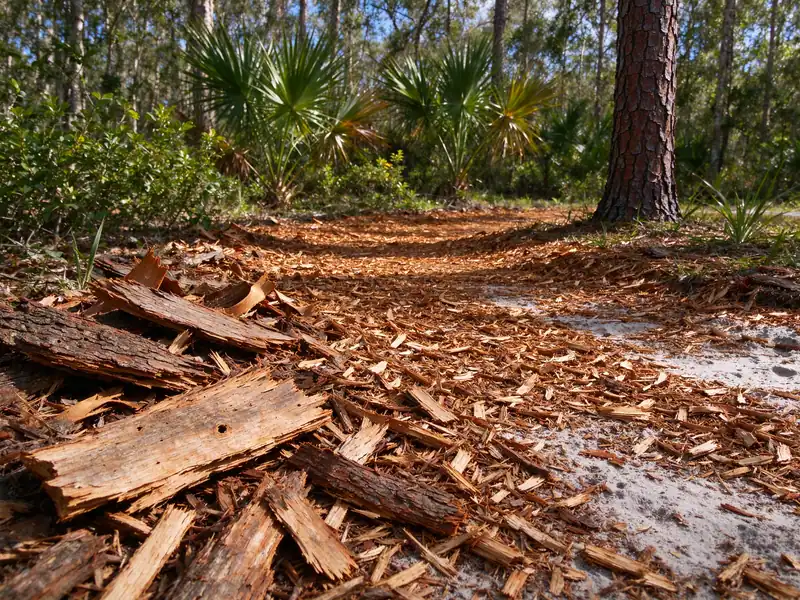
A mulcher processes suitable vegetation into smaller woody material. That material generally stays within the agreed work area. It is not the same product as screened landscape mulch delivered in a bag, and the resulting surface is not automatically suitable for every activity.
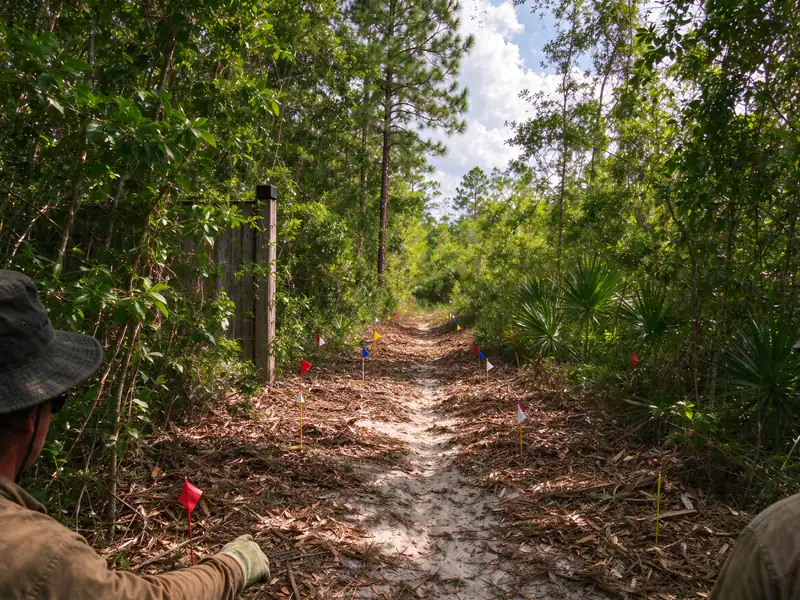
For a wooded parcel you want to inspect or maintain, leaving processed material can avoid the loading and hauling needed for whole branches. For an access opening, consider whether you will walk, mow or drive there afterward. Each use changes what residual pieces, low stumps and uneven ground are acceptable.
A practical fit
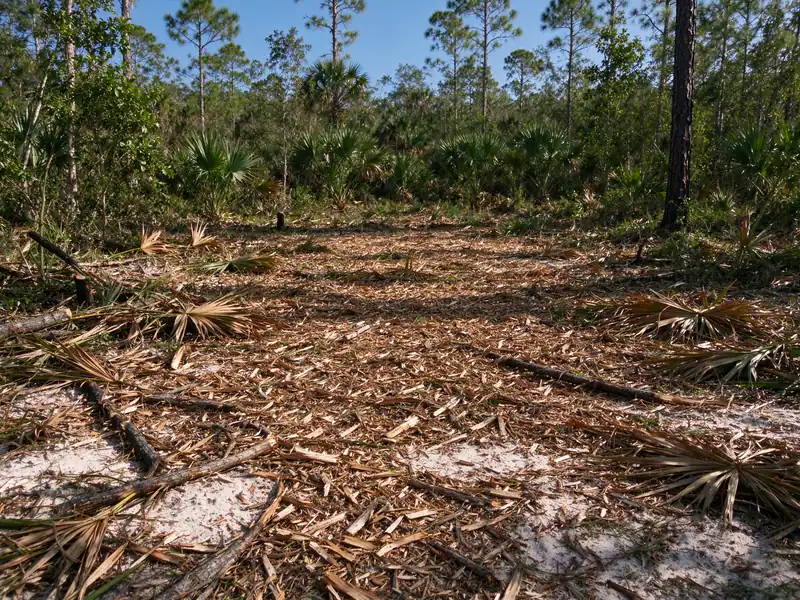
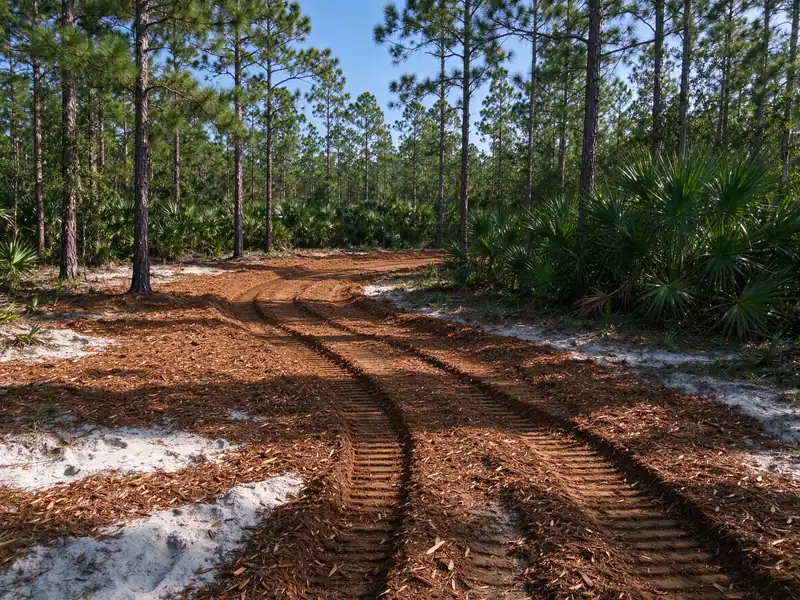
Mulching may fit when the objective is to reduce suitable brush, open sightlines or manage growth around trees that stay. Define the desired vegetation height, any excluded areas and the treatment of larger pieces. A photograph of a neat finished lot is useful context, but the written finish should describe your own property.
A different method may be needed
If the next trade needs roots and organic material removed from a building area, discuss construction site clearing. Shredding the visible vegetation does not remove every root system or produce engineered ground. Mulching the whole footprint first could create an additional material-removal step rather than complete it.
Match the equipment to the actual access
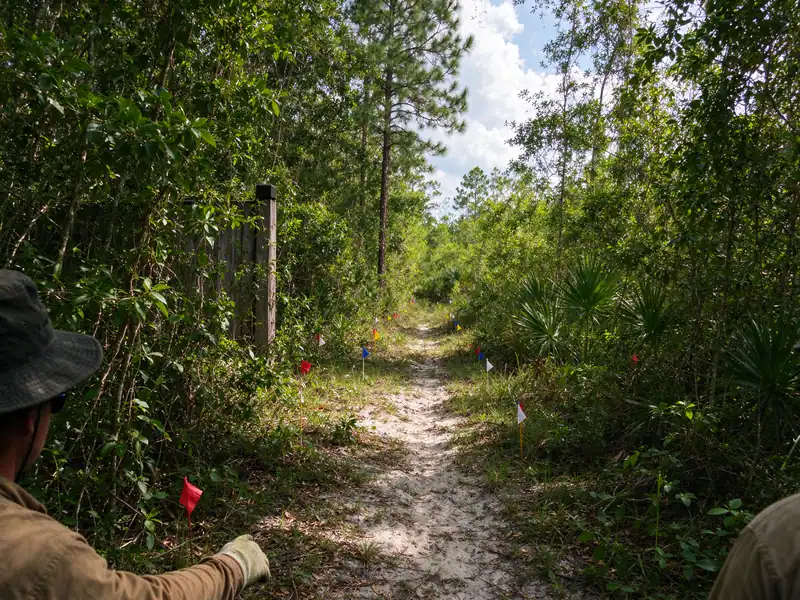
The width of an entrance is only one part of access. A machine also needs a workable approach, overhead clearance, turning space and ground that can support its movement. Identify drainage features, soft areas, narrow corners and trees that must remain along the route.
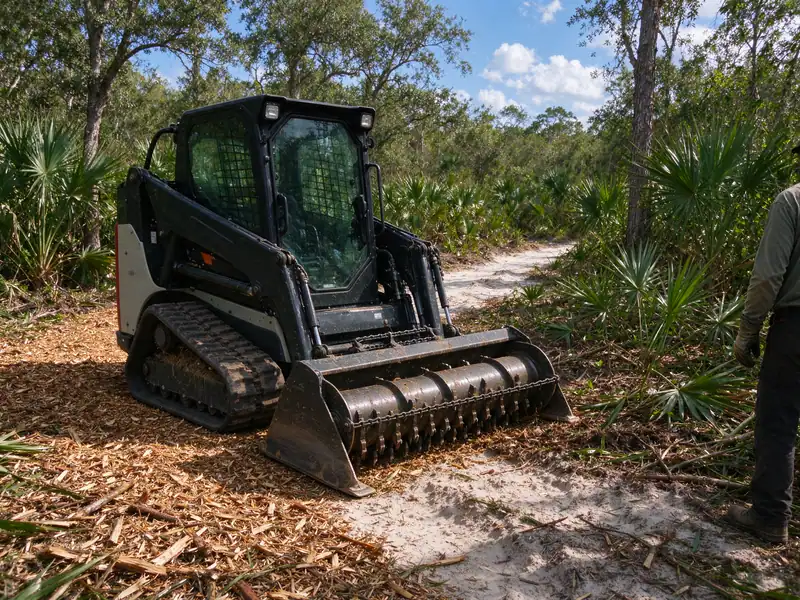
Tracked equipment can be useful on a clearing project, but tracks do not make every surface suitable. Wet or weak ground may change the route, timing or method. Tell us where you have seen standing water, even if the property looks dry during the estimate discussion.
Machine capacity also affects which vegetation can be processed efficiently. Do not select a service solely from an advertised maximum tree diameter. Stem form, density, surrounding trees and the requested finish all matter. Larger trees, awkwardly placed stems or material entangled with wire may need a separate approach.
| Your intended result |
Clarify before accepting mulching |
| Walk and inspect the parcel |
Remaining low stumps, footing and the route through the material |
| Maintain an open area |
What equipment you plan to use afterward and what its surface needs |
| Preserve a wooded screen |
Which stems stay and where machinery must not travel |
| Begin a building project |
Whether the next contractor accepts any woody material in that area |
Be specific about stumps and roots
Forestry mulching is a surface vegetation treatment, not a promise of complete below-ground removal. Roots can remain, and the treatment of stump projections depends on the agreed scope and equipment. Ask what the finished surface will contain instead of assuming that a low-looking stump has disappeared underground.
If particular roots or stump masses conflict with future work, identify those locations separately. Stump and root removal addresses a different finish and may involve excavation, holes, handling root balls and follow-on ground preparation. It need not be applied indiscriminately to a whole parcel when only selected locations require it.
This distinction is especially useful when a property will be developed in stages. The area around a future building can have one specification while a maintained edge has another. Mark those limits on the plan so the less intensive treatment does not drift into an area that needs a different handoff.
Decide how the processed material should sit
The amount of material produced depends on the vegetation being processed. A dense patch can leave considerably more woody material than a light opening. Discuss the target finish and whether redistribution or additional passes are included, rather than assuming all material will disappear into a uniform thin layer.
Keep material placement compatible with retained trees, access, drainage features and the intended use. Piling material against a retained trunk is not the same as distributing it across an approved clearing area. Any limits around sensitive locations should be clear before machinery begins.
If you later want turf, planting beds or a firm construction surface, further preparation may be needed. Organic material changes as it breaks down. Do not use a freshly mulched appearance as proof that the ground is ready for fill, pavement or structural loading.
Keep desirable trees out of the work path
Mulching around trees requires more than steering clear of their trunks. Machinery travel and attachment reach can conflict with roots, bark and low branches. Identify the trees to retain, establish working limits and resolve a route that does not depend on squeezing between valued specimens.
For mixed vegetation, marking is particularly important. Small desirable trees can look similar to unwanted growth from an equipment cab. Where identification is uncertain, leave the plant in place until the decision is resolved. Selective clearing may be the more useful description of the work when preservation is the main priority.
Plan for regrowth rather than expecting a permanent reset
Some vegetation can return after cutting, and new growth can establish in an opened area. Mulching does not, by itself, promise eradication of invasive plants. The species present and the future maintenance method belong in the initial conversation.
For suspected Brazilian pepper, discuss identification and a suitable follow-up plan rather than relying on another pass over whatever returns. The regrowth guide helps separate the first clearing visit from longer-term management. Any specialist treatment should be a defined scope, with its requirements checked separately.
Confirm North Port permissions before processing vegetation
A mulcher is still removing or altering vegetation. Choosing a method that leaves material on site does not establish an exemption from applicable approvals. Review the actual parcel and proposed work against North Port’s tree-removal guidance.
Protected wildlife concerns also remain relevant. Keep suspected gopher tortoise burrows undisturbed while qualified guidance is obtained. A visually open route does not prove that wildlife or wetland questions have been resolved. The clearing boundary should follow the approved work limits, not simply the easiest machine path.
Compare a complete mulching scope
Area is only one cost driver. Vegetation thickness, stem size, working room, retained plants, hidden debris and the finish requested can change the effort. A quoted equipment day does not necessarily describe the same result as a defined completed area.
Ask the proposal to identify the work boundary, vegetation exclusions, stump treatment, material distribution and any haul-off. Where wire or mixed debris is discovered, agree how that condition will be assessed before additional work proceeds. Use the cost guide to compare the same inclusions across proposals.
Request an estimate with the location, approximate area, safe access photographs and your intended use. Say whether you can accept processed material on site and identify anything that must stay. Those decisions make it easier to determine whether forestry mulching is the right finish for your North Port property.