Does a debris-removal quote include cutting standing vegetation?
Only when specified. Cutting, gathering an existing pile and hauling are different tasks. Identify which work has already been completed.
Glade North Port Land Clearing
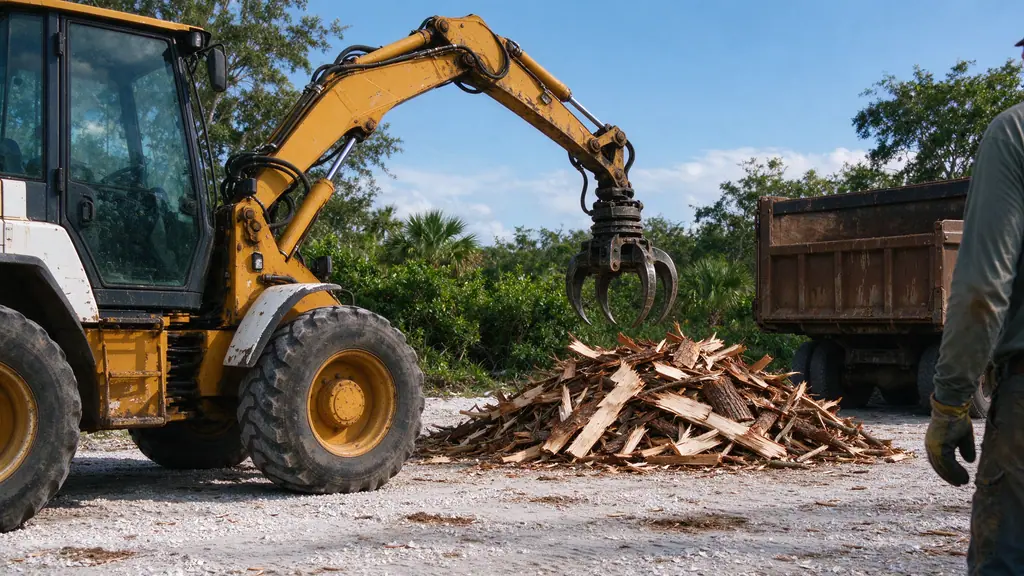
Cutting vegetation can solve one problem and create another if the material ends up where you need to work. A pile beside a future driveway, branches tangled with old wire or root balls too large for the planned loading route can keep an otherwise cleared site from being useful. Decide the material destination before the cutting starts when possible.
Glade offers land clearing debris removal in North Port for agreed woody material associated with clearing work. The scope can include processing, gathering, loading and haul-off where specified. It is important to distinguish those tasks because a quote for one does not automatically include the others.
Clean branches, trunks, brush, chips and stump masses are all vegetative material, but they do not handle the same way. A loose brush pile can contain considerable empty space, while a compact root ball can carry soil and be difficult to load. A photograph from one side rarely shows the entire condition.
Provide safe views of the pile and the route to it. Describe whether the material came from recent cutting, earlier clearing or an unknown previous use. If some of it is already mixed with fencing, plastic, demolition material or household waste, say so before requesting a vegetation-only price.
Do not assume that a receiving facility accepting woody debris will accept every mixed load. Handling and destination can change when contamination is present. Identify what is known and agree how newly discovered material will be assessed rather than burying the uncertainty in a general cleanup description.
On a larger property, mark each pile or area included in the work. A quote based on the visible roadside pile should not be expected to include material hidden farther back. A simple site sketch makes it easier to compare loading distance and access for each area.
| Material outcome | Useful when | What still needs deciding |
|---|---|---|
| Chip suitable woody material | Smaller pieces can stay in an approved area | Distribution, residual pieces and handling of unsuitable material |
| Move material on the parcel | Another agreed location can accept it | Route, pile limits and eventual removal responsibility |
| Load and haul away | The work area or parcel must be free of specified material | Loading access, transport and receiving requirements |
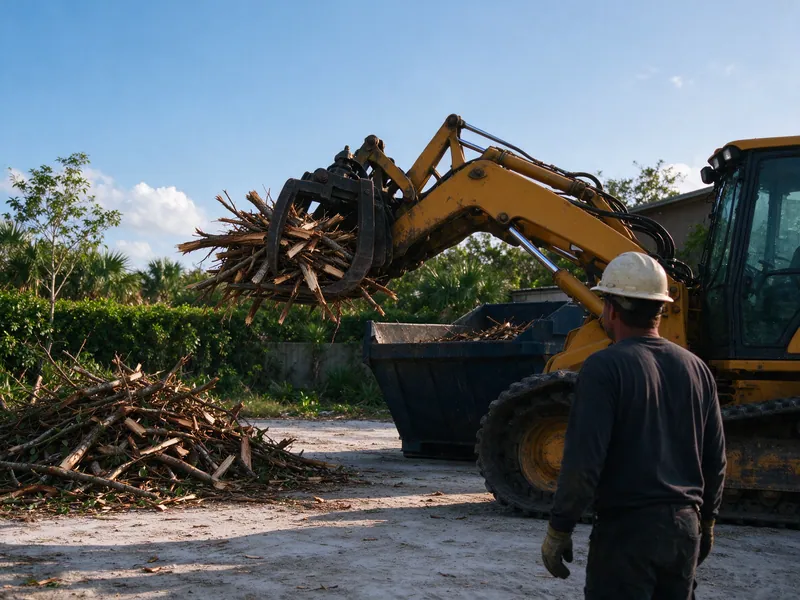
A wood chipper can process suitable branches and woody material, while a grapple attachment can help gather or load material where conditions allow. Equipment choice follows the material and route. A tangled pile containing metal should not be treated as ordinary chipper feed merely because most of it looks like brush.
If vegetation has not been cut yet, forestry mulching may reduce suitable growth in place where a woody surface is acceptable. That is a different choice from chipping an existing pile or hauling material off site. Compare the finished surface and future use, not just the reduction in visible pile size.
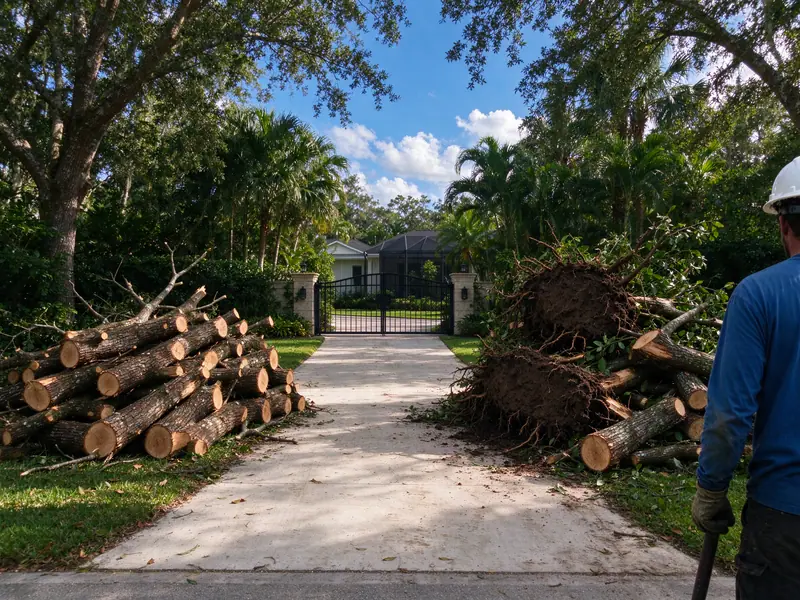
A stump pulled from the ground is not the same load as a bare trunk section. Root masses can hold soil and irregular projections, affecting equipment, loading space and destination acceptance. Describe them separately from brush when asking for an estimate.
If extraction has not occurred, establish who removes the root mass and who handles the resulting hole. Stump and root removal addresses the below-ground obstruction; debris removal addresses what happens to the extracted material. Neither scope automatically includes the other.
For future construction areas, verify whether chips, buried wood or organic material can remain with the next contractor. Moving a root ball away from the center of the footprint may not satisfy a requirement to remove material from the entire work zone. Make the destination precise enough to inspect afterward.
A dump truck needs an approach, a loading position and room to leave with its load. If it cannot reach the pile on firm ground, ask whether material will be shuttled to a separate loading area and whether that extra handling is included.
A truck does not necessarily follow the same path as a clearing machine. The route needs enough working room for approach, loading, turning and departure. A narrow entrance or soft section may require material to be moved to a separate loading area, changing both effort and staging.
Show the gate, bends, overhead obstructions and ground between the pile and road. Identify retained trees, fences, utilities, drainage features and finished surfaces to be protected. Do not assume a driveway suitable for a passenger vehicle is suitable for the proposed loaded equipment.
If a loading position could affect neighbors, tenant access or traffic, resolve the arrangement before treating it as available. The estimate should identify the assumed staging area, not rely on whatever space happens to be open on the day. Equipment access and hidden debris explains useful information to provide safely.
Planning this work? Describe the area, the finish and what should remain.
Discuss your clearing scopeHauling includes more than putting material into a truck. The material must be acceptable at the proposed destination, transported under the applicable arrangements and unloaded appropriately. Ask whether receiving charges are included or treated separately and how a rejected or reclassified load would be handled.
A proposal based on a number of loads should explain its assumptions. Loose branches, chipped material and soil-heavy roots can use available capacity differently. A pile’s apparent footprint is not a dependable conversion to a fixed number of loads without assessing its composition and loading conditions.
Do not confuse a homeowner disposal option with acceptance of material from clearing work. The applicable receiving rules and eligibility need confirmation for the actual load and hauler. A general facility name is not enough if the material type has not been checked.
A burn pile does not become an approved disposal method simply because the material is vegetation or because a neighboring property once burned debris. Burning is a separate decision that depends on applicable authorization, current conditions and the proposed activity. Do not include it as an assumed shortcut in a hauling comparison.
If a quote mentions burning, ask who confirms the requirements and what the alternative is if it cannot proceed. Leaving an unapproved pile indefinitely may be incompatible with your intended site use. The mulch, haul-off or burn guide separates the options without assuming that each one is available on every parcel.
A haul-off scope should describe the material to be removed and the area to be left usable. Decide whether scattered chips, small pieces and soil disturbed by loading are acceptable. A vegetation-debris removal price does not necessarily include fine raking, grading, imported fill or restoration of every surface.
Where material stays, mark the permitted location and boundaries. Avoid blocking access or placing piles near retained trunks or drainage features. If the location is temporary, identify who handles later relocation or disposal and when that must occur for the next phase.
For a construction handoff, have the next contractor describe the required organic-material finish. For a maintained property, consider how remaining pieces will affect walking or mowing. Those two projects may need different cleanup standards even when the initial piles look similar.
Compare gathering, processing, loading, transportation and receiving charges separately. Include distance from each pile to the loading area, material contamination, root-ball handling and restrictions on site movement. A lower transport price may not include the work needed to get the material to the truck.
Request an estimate with the North Port location, safe photographs, known material types and the result needed after removal. Say whether any material can stay and where the truck might stage. A clear destination and finish make the quote easier to evaluate and help keep the newly opened area useful.
Only when specified. Cutting, gathering an existing pile and hauling are different tasks. Identify which work has already been completed.
Do not assume it can. Metal and other mixed material need assessment and separation before suitable woody material is processed.
Not necessarily. Soil, irregular shape, loading effort and receiving requirements can change the handling.
No. Relocation keeps material on the property. Haul-off means transport to an appropriate off-site destination.
Not always. Width, turning space, ground support and retained features can require a separate staging or loading location.
Check the proposal’s volume and material assumptions. Loose brush and soil-bearing roots can load differently, and hidden material can change the estimate.
They may be included or separate. Ask the proposal to state receiving charges, material acceptance and how changed load conditions are handled.
Confirm eligibility and material acceptance with the receiving facility for the actual load and hauler. Do not assume homeowner rules cover commercial hauling.
Only if applicable rules, authorization and current conditions allow the proposed activity. It should not be assumed as a default disposal method.
Define it for your next use. Removal of listed debris may still leave chips, uneven soil or a need for follow-on grading unless those items are included.
Discuss the clearing scope
Describe the result you need, the work boundary and the features to retain.