Does grinding include roots beyond the stump?
It only covers the agreed treatment area and depth. Ask which exposed roots are included and which roots will remain outside that scope.
Glade North Port Land Clearing
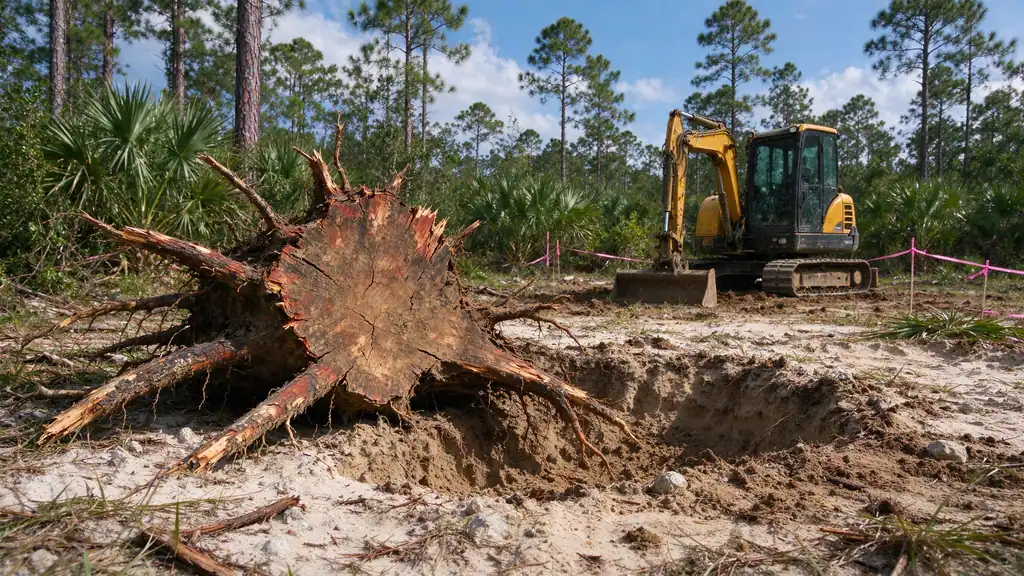
A stump that interrupts mowing presents a different problem from a root mass beneath a proposed driveway. Both may be called stump removal, but they do not necessarily need the same method. The important decision is what must be gone, what may remain and what will happen to the space afterward.
Glade offers stump and root removal in North Port as part of a defined clearing scope. Describe the next use of the area before choosing grinding or extraction. That helps avoid a low stump that still obstructs future work, or unnecessary excavation where a smaller treatment would meet the goal.
A stump grinder reduces wood within an agreed treatment area and depth. It produces chips mixed with material from the immediate work area. Roots beyond that treatment can remain, and the finish depends on what is done with the chips afterward.
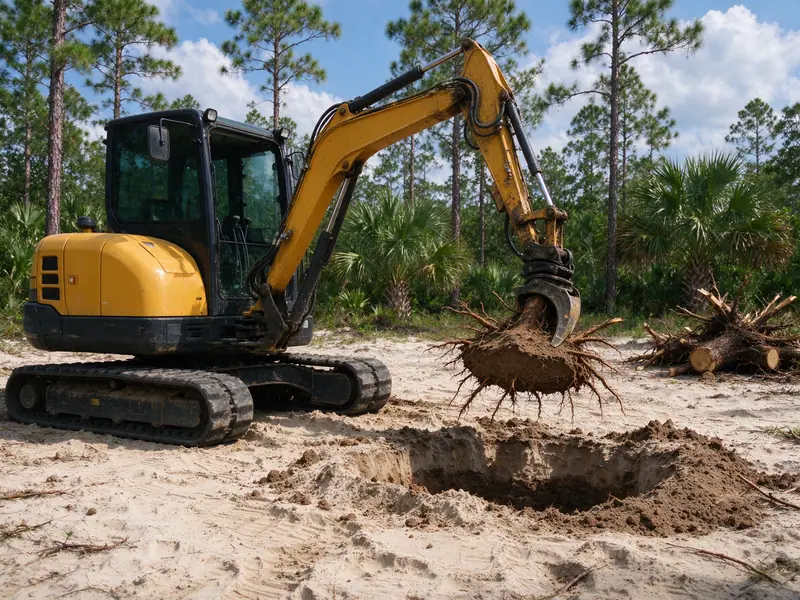
Extraction removes a specified stump or root mass using a suitable method, which may involve an excavator where access and conditions allow. That can address a more substantial below-ground obstruction, but it also leaves an opening and material to handle. The excavation itself is not the finished landscape or construction surface.
| Next use | Question to settle |
|---|---|
| Easier mowing | What projection and chips can remain without interfering? |
| Replanting nearby | Where will the new planting go, and what root material conflicts? |
| A fence or access route | Which specific posts, alignment or travel areas need to be clear? |
| A foundation or paved area | What below-ground condition does the next contractor require? |
Neither method should be sold as universally better. The grinding versus removal guide helps compare them by the condition left behind. Where construction is planned, obtain the next trade’s specification rather than selecting a generic depth from an advertisement.
The visible cut surface is only part of the work. Buttress roots, multiple stems, surrounding roots and the position of the stump can affect access and removal. A stump in an open lot is a different proposition from one pressed against a fence or close to a retained tree.
Provide a wide photograph showing the surroundings as well as a closer view of the stump. If several stumps are involved, mark their positions on a simple site sketch and explain which ones obstruct your planned use. Counting stumps without identifying their context makes comparison less useful.
Tell us whether the tree was recently cut, whether the stump has already been partly ground and whether previous work exposed buried materials. Do not dig around it yourself to prove the depth. Known information is useful, but a photograph cannot establish the entire root system or all underground conflicts.
Root work disturbs ground. Known utility routes, irrigation, drainage pipes, septic components, old foundations and other buried features must be part of the planning discussion. Surface markers and the appropriate location process help establish constraints; an apparent gap between objects is not proof that the ground is clear.
Roots can also run toward trees you want retained. Removing a root mass near another tree may create preservation questions that need qualified input. If keeping a particular tree matters, identify it before the excavation method is selected.
Fence posts, driveways and walls can restrict machine position and attachment movement. The fact that a stump is reachable on foot does not mean extraction equipment can work there safely. A tighter access arrangement may change the method, scope or feasibility of the proposed removal.
An excavator or grinder needs more than a gate opening. The approach, turning space, ground support and route out with the material all matter. Low branches, narrow corners and surfaces that must be protected can limit the workable options.
Consider loading access as well. A machine may be able to reach the stump while a truck remains much farther away. Moving extracted material between those points can be a meaningful part of the job, especially where roots carry soil and the route crosses retained landscaping.
Tell us about wet areas and known soft ground along the route. Equipment selection should account for the conditions, not simply the size of the stump. Equipment access and hidden debris provides a useful checklist for describing constraints without entering an unsafe area.
Planning this work? Describe the area, the finish and what should remain.
Discuss your clearing scopeGrinding chips can be left, gathered, redistributed or removed, depending on the agreed result. Those are different scopes. A chip-filled depression may look covered immediately after work but should not be mistaken for a stable finished surface for every use.
Extracted roots create a different handling problem. A large root ball may contain substantial soil, and the material may need separation or a suitable receiving destination. Ask whether loading, transport and disposal are included rather than assuming extraction means the material leaves the property.
If material will remain on site, agree on its location. A pile should not block access or occupy the next work area. If it must leave, clearing debris removal should specify the kind of material, loading route and destination requirements.
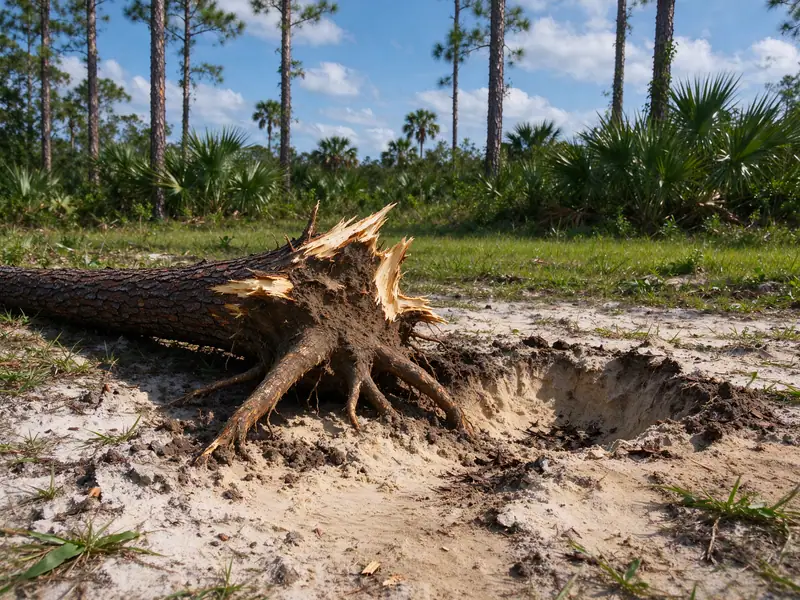
After extraction, someone must address the opening. Specify whether the scope includes temporary protection, backfill, imported material or only removal of the root mass. Do not leave the responsibility unclear, particularly where other people will enter the property after the clearing crew leaves.
For a future structure or paved surface, the next contractor’s requirements govern ground preparation. Placing loose material into a hole is not the same as engineered filling and compaction. Testing, material suitability and final elevations belong to the appropriate follow-on scope.
For a landscape area, settlement and the behavior of remaining organic material still deserve attention. Discuss what level of finish is intended and who will handle later adjustment or planting preparation. A stump-removal quote should not silently become a promise of a finished lawn.
Grubbing generally describes removal of specified stumps and roots from an area, rather than treating one visible stump in isolation. It is useful when a defined construction zone needs below-ground obstructions addressed. The boundary and required finish should be clear enough for the next contractor to understand what was done.
For a whole parcel, extensive root disturbance may be unnecessary outside the proposed work area. A combination of surface clearing and targeted removal can make more sense when some vegetation and ground are to remain. Selective clearing helps define retained zones alongside the more intensive work.
Do not assume that a previously cut tree resolves every question about later ground disturbance. The actual parcel, remaining vegetation and proposed work still need review. North Port’s tree-removal guidance is the starting point for local tree questions.
Keep suspected protected wildlife burrows and unresolved sensitive areas undisturbed while obtaining appropriate guidance. Root excavation can extend beyond what is visible at the stump. Working limits should reflect the site conditions and applicable requirements rather than only the apparent obstacle.
A useful proposal identifies the target stumps or area, method, treatment limits, residual roots, chip or root-ball handling, access and hole finish. Cost can change with any of those items. A stump count or a simple diameter figure cannot represent the entire project by itself.
Request an estimate with safe photographs, the property location and the reason the stump is in the way. Include plans or next-trade requirements where available. That gives the discussion a practical aim: a removal finish that solves the obstruction without leaving the next stage undefined.
It only covers the agreed treatment area and depth. Ask which exposed roots are included and which roots will remain outside that scope.
Yes. Roots and woody material can remain below or beyond the treated area. The builder’s required finish should determine the scope.
Do not treat chips as engineered fill. Structural ground preparation needs the appropriate material and requirements from the next contractor.
That requires assessment of the retained tree and proposed disturbance. Qualified arboricultural input may be appropriate before deciding which roots can be disturbed.
It is useful context, but access, buttress roots, nearby features and the desired finish also affect the work.
Only when specified. Extraction, loading, transport and disposal are separate elements that should be clear in the proposal.
Identify that responsibility before work. The removal scope may stop at extraction unless backfill and its required finish are expressly included.
The entrance is only one constraint. The approach, turning room, ground conditions and obstacles around the stump also need review.
It describes a defined root and stump-removal scope. The actual limits and remaining ground condition need to be stated for the project.
Not necessarily. Target the roots that conflict with the intended use while considering retained vegetation and the disturbance created.
Discuss the clearing scope
Describe the result you need, the work boundary and the features to retain.