Can a commercial clearing project be priced by release area?
Yes, that can be the requested structure. Identify each phase, its limits, timing assumptions and required handoff so pricing reflects what is actually available for work.
Glade North Port Land Clearing
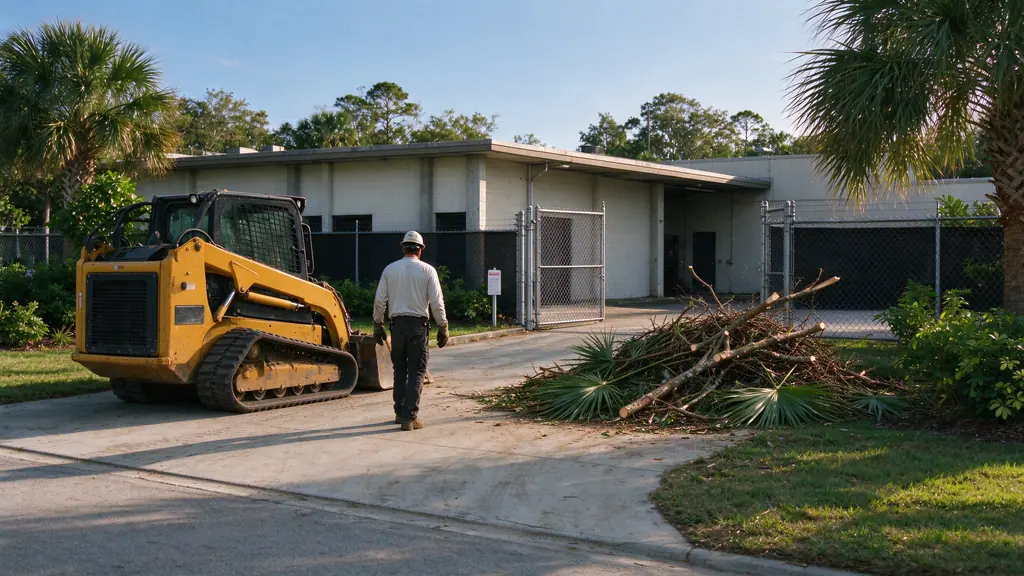
Commercial clearing rarely ends at the edge of the vegetation. A cleared phase may need to stay accessible to tenants, accommodate deliveries or hand over to a site contractor working from a particular drawing revision. The useful measure of completion is whether the agreed area is ready for its next activity without disrupting the parts of the property still in use.
Glade offers commercial land clearing in North Port for defined vegetation and material-handling scopes. Bring the project plans, operational constraints and handoff requirements into the estimate discussion. That allows clearing to be priced as part of the project sequence rather than as an isolated acreage figure.
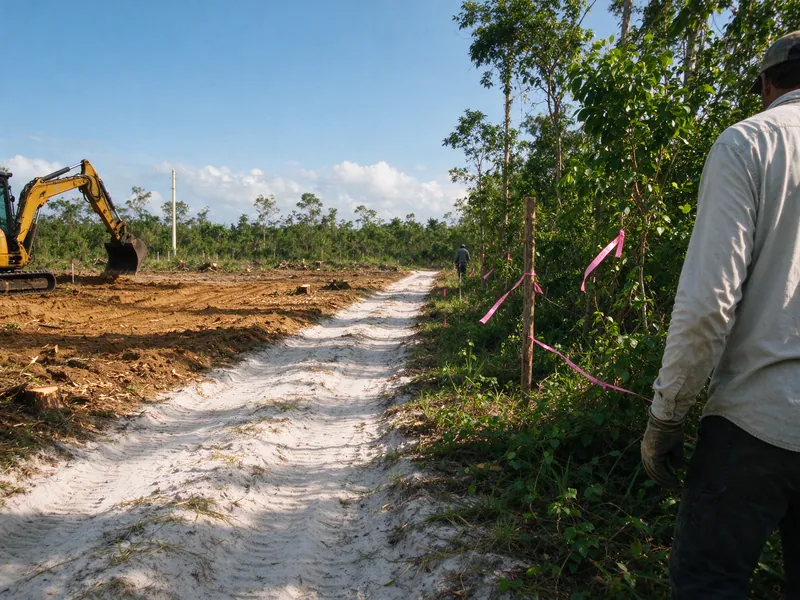
Start with the limits of the phase available for work. The full property boundary, approved disturbance area and first release can be very different. Color-mark the current phase and identify adjacent areas that must remain undisturbed until later approvals, tenant changes or construction activities are resolved.
A site manager should know which drawing governs the work and who can approve a revision. If a loading area or access drive moves, that change can affect vegetation retention, stump treatment and the disposal route. Keep changes tied to a dated plan or written instruction rather than relying on a conversation in the field.
Movement through an area does not necessarily authorize vegetation removal there. Show temporary travel routes, loading zones and exclusion areas separately from the clearing footprint. The plan should explain how machinery reaches a phase without turning adjoining land into an informal extension of the work area.
The owner, tenant representative, general contractor and site contractor may have different priorities. Name the person authorized to accept the clearing finish and the person who can resolve an unexpected condition. This reduces the risk of one party requesting more work than another has approved.
If a facility remains occupied, discuss delivery windows, parking, public access and emergency routes before choosing staging locations. The clearing plan should not assume that an apparently open driveway can be occupied by loading equipment throughout the day.
Consider the path of loaded trucks as well as clearing machines. Turning space, entrance geometry and the ability to separate equipment from ordinary site traffic can affect how material is moved. Where access is constrained, a different loading position or sequence may be more useful than simply adding machines.
Known utilities, lighting, irrigation, drainage structures and private site services should be identified using available project records and appropriate location procedures. A vegetation plan may not show every buried or overhead conflict. If a condition is unresolved, keep that area outside the release until the responsible party provides direction.
| Project zone | Finish to state before pricing |
|---|---|
| Future building or pavement | Required root and organic-material handoff from the next contractor |
| Perimeter or screening area | Vegetation to retain, machine exclusion limits and acceptable appearance |
| Temporary access or staging | Usable width, ground constraints and who provides surface preparation |
| Later construction phase | Whether anything may be cut, stored or traveled across now |
Commercial parcels can include retained landscape beside a more intensive construction footprint. Applying one treatment everywhere may create unnecessary disturbance outside the future work or leave roots where the next contractor needs a different finish. Define each zone according to the next use.
For surface vegetation management, brush clearing may address suitable growth while leaving roots. For a defined building area, construction site clearing should reflect the next trade’s root and organic-material requirements. Neither description should silently include final grading or certification of ground conditions.
Retained trees and screening can be important to the property’s operation and appearance. Protecting them requires a practical equipment route and material-handling plan, not merely a note saying “trees to remain.” Mark relevant protection limits and identify any qualified advice required for work near valued trees.
North Port’s tree-removal guidance is a starting point for local review. A commercial project schedule does not establish permission to clear. Check that the proposed release and the applicable approvals describe the same work before mobilization is treated as a firm milestone.
Wildlife and wetland questions may be separate from tree approval. Keep suspected gopher tortoise burrows undisturbed while obtaining qualified guidance. Use the FWC permitting information to identify the appropriate process rather than relying on a contractor’s view from the road.
Planning this work? Describe the area, the finish and what should remain.
Discuss your clearing scopeOn a phased project, drawings or approvals may call for specific protection or erosion-control measures. Identify who supplies, installs, maintains and inspects those measures. Clearing should not begin on the assumption that another party has completed a prerequisite that has not been checked.
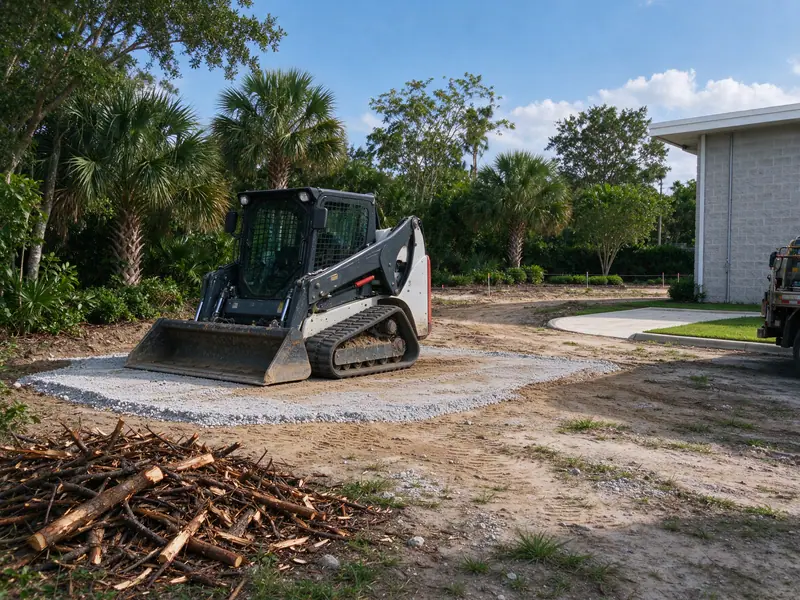
Temporary material storage can interfere with drainage or access even when it is outside the main building footprint. Mark allowed pile areas and the date or project event by which each area must be cleared. Do not let a temporary stockpile become a conflict for the next phase.
If site conditions change during work, identify the decision route for adjustments. Soft ground, an unrecorded line or unexpected mixed material can affect sequencing. A documented pause-and-review procedure is more valuable than an open-ended promise to handle anything discovered on site.
Brush, trunks, chips and soil-bearing root balls have different handling requirements. Decide what can remain on site, what must leave each phase and what must leave the parcel entirely. A requirement to clear a work area can sometimes be met by relocation, while a disposal requirement cannot.
Confirm loading access and the receiving destination for the material actually present. Old fencing, construction remnants or dumped waste should not be blended into a generic vegetation description. Mixed materials can require different separation and disposal arrangements, with their own costs and responsibilities.
For phased hauling, state whether transport is tied to each release or coordinated across phases. Consolidation may be useful only if temporary storage is available and approved. It should not come at the expense of tenant access, drainage protection or the next contractor’s work area.
A commercial quote should identify the plan revision, release limits, vegetation treatment, specific root work, debris destination, mobilization assumptions and site restrictions. List exclusions clearly, including surveys, permits, specialist wildlife work, engineered earthwork, fill, compaction and drainage installation unless separately contracted.
Compare how each proposal treats additional phases and unexpected conditions. A low initial amount may cover only cutting, while another includes loading and disposal. The quote checklist helps compare the work delivered without pretending that every commercial parcel can be priced from its area alone.
Before release, review the agreed boundary, retained features, remaining material and unresolved conditions. Photographs and a marked plan can support that review. They should not be represented as geotechnical testing, an engineering sign-off or acceptance by a public authority.
Where follow-on earthwork is planned, confirm who takes responsibility for holes, grades, imported material and compaction. The important handoff is the actual condition left on site, not a general label such as “cleared and ready.” Record exceptions while the relevant parties can still see and discuss them.
Contact Glade with the property location, current plans, proposed phasing and site operating constraints. Include the person responsible for scope changes and the next contractor’s required finish. Those details make the clearing estimate useful to the schedule, the property manager and the trade that follows.
Yes, that can be the requested structure. Identify each phase, its limits, timing assumptions and required handoff so pricing reflects what is actually available for work.
Identify the governing documents and resolve conflicts through the project’s responsible parties. Do not leave drawing precedence to an assumption in the field.
Potentially, depending on separation, access and operational constraints. Discuss occupied areas, delivery routes and allowed work zones before choosing staging locations.
Name the authorized project representative in advance. A field request should be reconciled with plans, permissions and written scope before work expands.
Only when expressly assigned. Identify who supplies, installs, maintains and inspects any required controls.
Only with an agreed location, access and removal plan consistent with project requirements. Temporary storage must not create an unplanned conflict.
No. Vegetation and root removal are distinct from geotechnical testing and engineered ground preparation.
Provide available records and identify location responsibilities and exclusion areas. The quote should explain how unresolved conflicts affect the release.
Yes. A perimeter buffer and future pavement area can need different finishes. Define the treatment and limits for each zone.
Review the completed limits, retained features, material destination, unresolved conditions and next-trade responsibilities against the agreed documents.
Discuss the clearing scope
Describe the result you need, the work boundary and the features to retain.