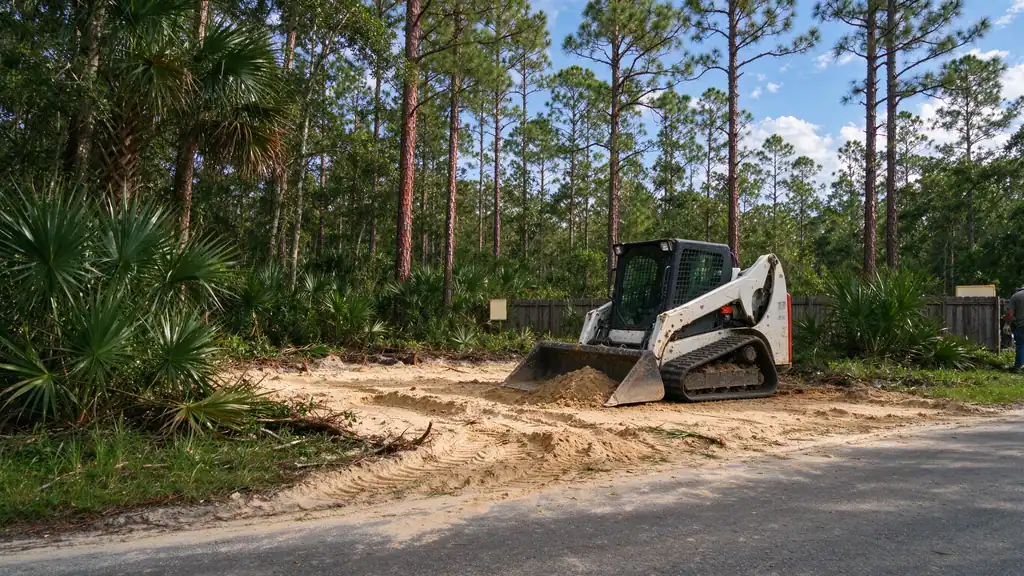
Glade land clearing in North Port, FL.

Tracked loader on a freshly opened sandy strip between saw palmetto and tall slash pines beside a North Port road

Open the space you need. Keep the clearing boundary, roots and debris finish clear from the start.

What needs to change?

Overgrowth blocks access

Brush, vines and dense understory call for a defined opening and a realistic maintenance finish.

A fence line has disappeared

Locate the boundary and identify old wire before choosing a clearing corridor.

A building project is taking shape

Match clearing to the plans and the next contractor’s required handoff.

You want to keep the canopy

Identify the retained trees and protect the space around them.

Lot clearing

Start with the use, not the machine.

Explore lot clearing
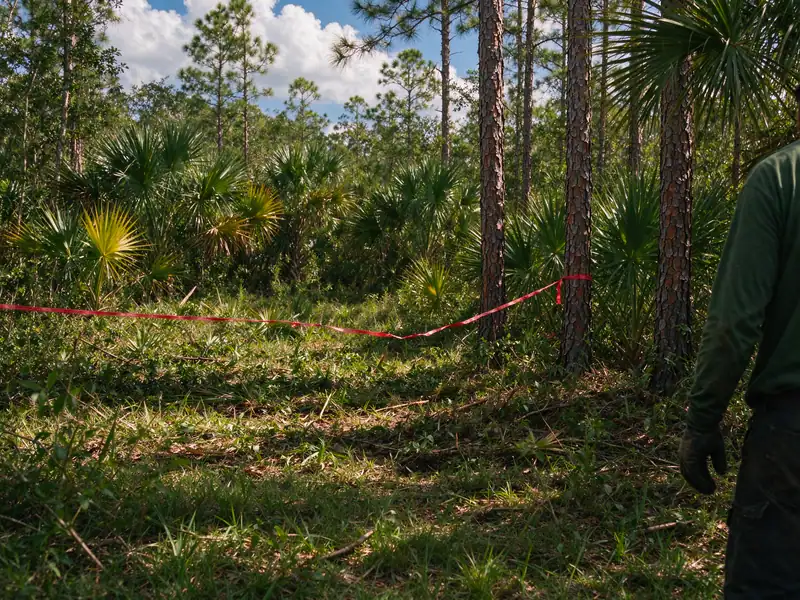
Red ribbon marking a work boundary across a pine and palmetto lot
Make room for the next use

A usable lot has a defined finish

Glade offers lot clearing in North Port for owners who need access, room for a project or a manageable property. Those goals can require different work.

  • Removing the visible vegetation is only one part of the decision.
  • Roots, retained trees, loose material and the next contractor’s needs should all be described before the scope is priced.

Draw the boundary first

A survey boundary and a clearing boundary are not interchangeable. Identify the area to open, the trees to retain and the route equipment will use.

  • A neighboring cleared parcel does not establish permission to clear yours.
  • A street address also does not settle every approval question.
  • Confirm the parcel’s jurisdiction and the applicable tree, habitat and drainage restrictions.

Say what happens to the material

Mulch left across the surface produces a different handoff from roots removed and debris hauled away. Ask which vegetation is included, how stumps will be handled and where material will end up.

  • Keep fill, compaction and final grading separate unless they are expressly included.
  • A clear written finish makes competing estimates easier to compare and helps avoid paying twice when the next phase begins.

Prepare a useful request

Share the parcel location, approximate clearing area, intended use and photographs taken from safe access points. Include any plans or known restrictions.

  • These details help define the questions that an on-site assessment still needs to resolve.

Forestry mulching

Open the surface. Understand what stays.

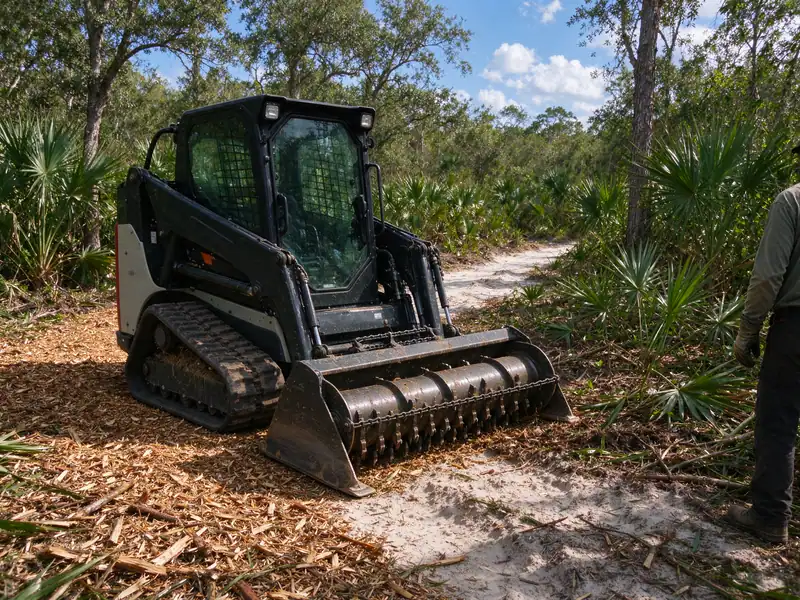
Tracked loader with a drum mulcher head stopped on fresh wood mulch beside a sandy path through palmetto
Keep the mulch. Open the surface.
Explore forestry mulching

Turn vegetation into surface cover

Glade offers forestry mulching where reducing brush and small woody growth on site fits the property’s intended use. A mulching attachment processes suitable vegetation into smaller material that remains on the ground.

  • That can change access and visibility without treating every square foot as a construction footprint.
  • Machine selection depends on the growth, terrain and room to maneuver.

Surface work is not root removal

Mulching does not automatically remove buried roots, excavate stumps or create a compacted building surface. If a driveway, foundation or utility trench is planned, identify that area separately.

  • The finish that works for access or vegetation management may not satisfy the next trade.
  • Ask how low the work reaches and what residual woody material should be expected.

Protect the places outside the scope

Mark retained trees and sensitive areas before equipment access is agreed. A machine’s physical ability to reach an area does not establish permission to disturb it.

  • Wet ground, concealed debris and limited turning space can change the method.
  • Keep an appropriate buffer around retained vegetation and resolve wildlife or wetland questions before work begins.

Plan for the next season

Opening the canopy does not guarantee that undesirable plants stay gone. Discuss the species present, expected regrowth and the maintenance needed afterward.

  • Compare mulching with cutting and hauling or a separately defined grubbing scope, using the finish you actually need as the deciding factor.

Brush clearing

Get past the overgrowth.

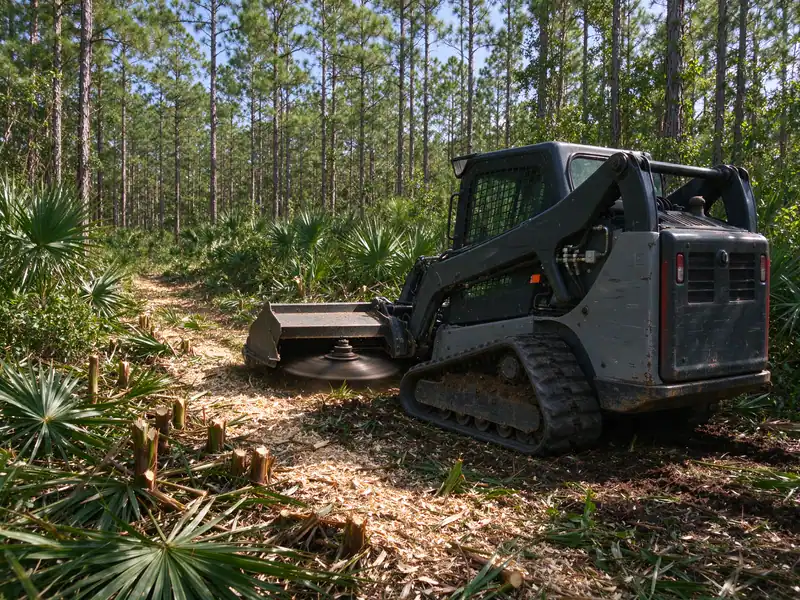
Skid steer with a rotary brush cutter parked at the end of a freshly cut strip through palmetto
Cut a way through the brush
Explore brush clearing

Make the property accessible

Glade offers brush clearing for overgrown areas where vines, palmetto and dense understory limit access or hide the ground. The right scope starts with the vegetation and the purpose of opening it.

  • A walking route, a fence perimeter and an entire building lot should not receive the same estimate simply because each is described as brush.

Separate cutting from control

Cutting back growth changes what is visible today. It does not by itself establish long-term control of every plant.

  • Brazilian pepper and other persistent vegetation need a species-aware plan.
  • Ask what material will be cut, what will remain and whether any follow-up treatment is a separate service.
  • Do not assume a one-time clearing price includes repeated visits.

Look for what the brush hides

Old wire, dumped material, low fencing and uneven ground may not be visible in a street photograph. Describe known obstacles and avoid entering dense growth just to obtain a better picture.

  • Equipment access, overhead clearance and space for debris handling all affect the practical scope.
  • Newly exposed hazards may need a different contractor or disposal route.

Choose a manageable finish

Decide whether cut material stays as mulch, is gathered or leaves the property. Retained trees and neighboring vegetation need clear boundaries.

  • Once the area is open, a maintenance plan helps keep that access useful.
  • Mowing, periodic brush cutting and specialist invasive-plant control are different tasks; the estimate should identify which of them is actually included.

Construction-site clearing

Prepare the clearing handoff.

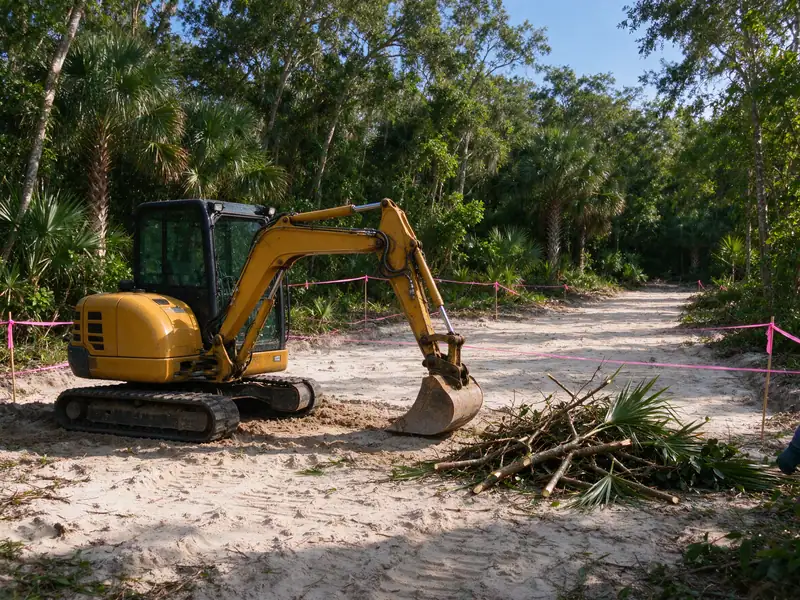
Compact excavator inside a ribbon-marked footprint beside a small pile of cut brush
Clear only the planned footprint
Explore construction-site clearing

Work from the planned footprint

Glade offers construction-site clearing with the clearing boundary tied to the proposed work. A house footprint, driveway route, staging area and drainage feature may each have different requirements.

  • Start with the available plans and identify which areas can remain undisturbed.
  • Clearing more land than the project requires can create additional material, restoration and approval questions.

Agree on the next trade’s needs

A lot that looks open is not necessarily ready for foundations. Roots, organic material, buried debris and soft ground can affect the next phase.

  • Ask the builder or site contractor to describe the required handoff.
  • Keep excavation, imported fill, engineered grading and compaction outside the clearing price unless they are explicitly included and appropriately performed.

Resolve constraints before disturbance

Tree approvals, protected wildlife and wetlands can affect where and when work proceeds. A gopher tortoise burrow is a reason to pause and obtain qualified guidance, not to push material around it.

  • Photographs cannot establish the absence of protected habitat.
  • Confirm the applicable review path for the actual parcel before scheduling land disturbance.

Leave a clear scope record

Use the plans to document retained trees, approved access, debris disposition and any areas excluded from the work. Record how unexpected obstacles will be handled rather than assuming they are covered.

  • A defined clearing finish helps the owner and following contractor understand what has been completed and what remains to be assessed before building.

Stump and root removal

The decision continues below ground.

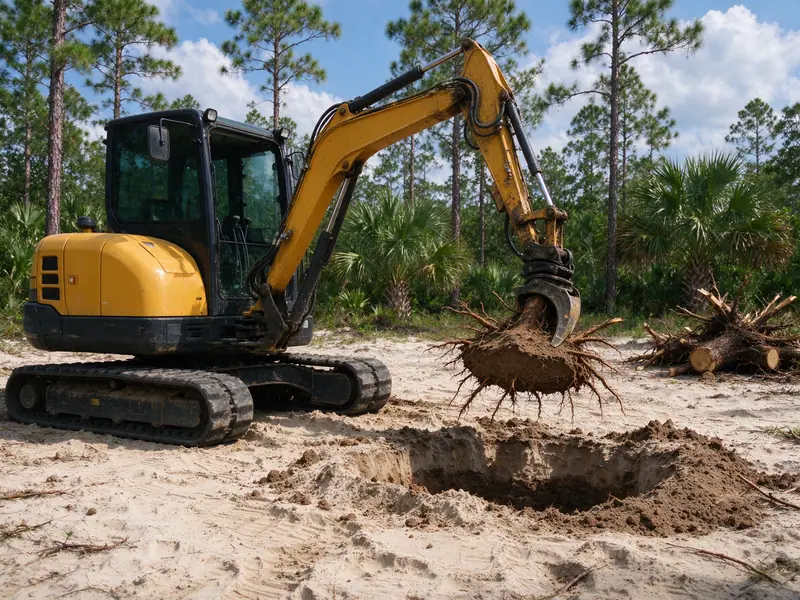
Compact excavator lifting a root mass from a hole in sandy ground
Take the roots out of the equation
Explore stump and root removal

Choose the removal goal

Glade offers stump and root removal as a defined part of land clearing. The necessary work depends on what will occupy the area afterward.

  • A stump in a future foundation footprint presents a different question from one at the edge of a maintained yard.
  • Describe the planned use before comparing a grinding proposal with excavation and removal.

Compare two different finishes

Grinding reduces the stump into smaller material within an agreed area and depth. Extraction removes the stump or root mass through excavation.

  • Neither description alone tells you how the resulting space will be finished.
  • Ask what roots remain, where chips or woody material go, and whether hauling, backfill or compaction is included as a separate scope.

Consider access and nearby features

A large stump can require substantial working room. Retained trees, fences, buried utilities and nearby structures can limit equipment positioning and excavation.

  • Utility locating and site assessment belong ahead of disturbance.
  • A photograph may show the trunk diameter but cannot establish every underground conflict or the condition of the surrounding soil.

Define what follows removal

Removing a root mass leaves a space that needs an appropriate next step. A landscaping finish and an engineered building requirement are not the same.

  • Keep the responsibility for replacement material, settlement management and final surface preparation clear.
  • Request an estimate that identifies the stump locations, intended finish and disposal plan so the work can be compared on equal terms.

Selective clearing

More open space. Deliberate retention.

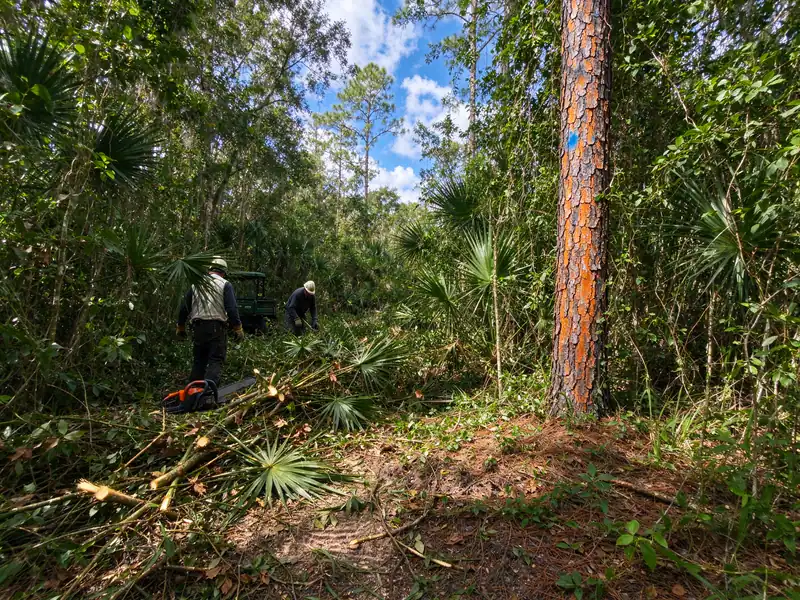
Marked pine kept at the edge of a narrow opening cut through dense understory
Open the ground. Keep the canopy.
Explore selective clearing

Keep the trees that matter

Glade offers selective clearing for owners who want improved access and usable space while retaining chosen vegetation. The scope begins by distinguishing what stays from what goes.

  • A verbal instruction to save the large trees can be too vague when several species and sizes share a crowded area.
  • Mark the intended limits before machinery is brought into the plan.

Protect more than the trunk

Keeping a tree standing does not protect it from every clearing impact. Equipment travel, soil disturbance and material storage can affect the area around it.

  • Discuss how access will avoid the retained trees and when an arborist’s input is appropriate.
  • Do not treat a narrow gap between trunks as proof that a machine can safely work there.

Match the opening to its purpose

A walking route, a view opening and a maintained outdoor area call for different widths and finishes. Consider future maintenance, drainage and where removed material will go.

  • Selective cutting can reduce the immediate disturbance, but remaining roots and stumps may still affect the next use.
  • State those expectations in the estimate rather than assuming a completely clean surface.

Document the agreed limits

Photographs and marked plans can help communicate the intended result, particularly when the owner cannot be present. Resolve boundary and approval questions before cutting.

  • After clearing, compare the agreed scope with the retained and opened areas.
  • Any additional tree removal should be treated as a separate decision, with the same attention to permission, access and material handling.

Fence-line and access clearing

Room to reach the work.

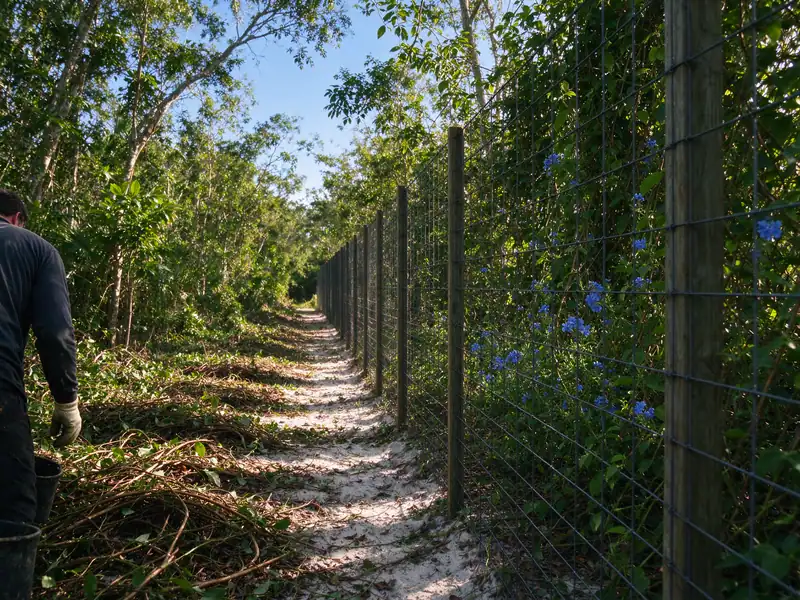
Narrow cleared path along a wire fence with cut vines laid on the cleared side
Give the fence line room
Explore fence-line and access clearing

Open a practical corridor

Glade offers fence-line and access clearing where overgrowth prevents inspection, installation or movement through a property. Define the corridor by its intended use rather than a rough line on a photograph.

  • A pedestrian path needs a different opening from a route for construction equipment.
  • Turning space, overhead branches and entry width all matter.

Establish the line before cutting

An old fence is not always a reliable property boundary. Resolve the boundary and any easement permissions before vegetation is removed.

  • Agree which side of the line can be worked from and which plants must remain.
  • If a new fence is planned, ask the installer how much working space is needed for posts, materials and equipment.

Identify buried and tangled obstacles

Wire hidden in brush can complicate mechanical clearing. Old posts, dumped material and loose metal may need to be separated from vegetation.

  • Describe known obstacles when requesting an estimate, and avoid pulling or cutting unfamiliar utility lines.
  • A clearing contractor’s scope should distinguish vegetation removal from fence demolition and disposal.

Keep the surface goal realistic

An opened corridor is not automatically a driveway or an all-weather road. Stumps, soft spots and drainage crossings can require separate assessment and work.

  • Ask whether the requested finish is mulched, cut and gathered, or cleared with root removal.
  • Include a maintenance plan so the corridor remains accessible after the first flush of regrowth.

Commercial land clearing

Define the limits before mobilization.

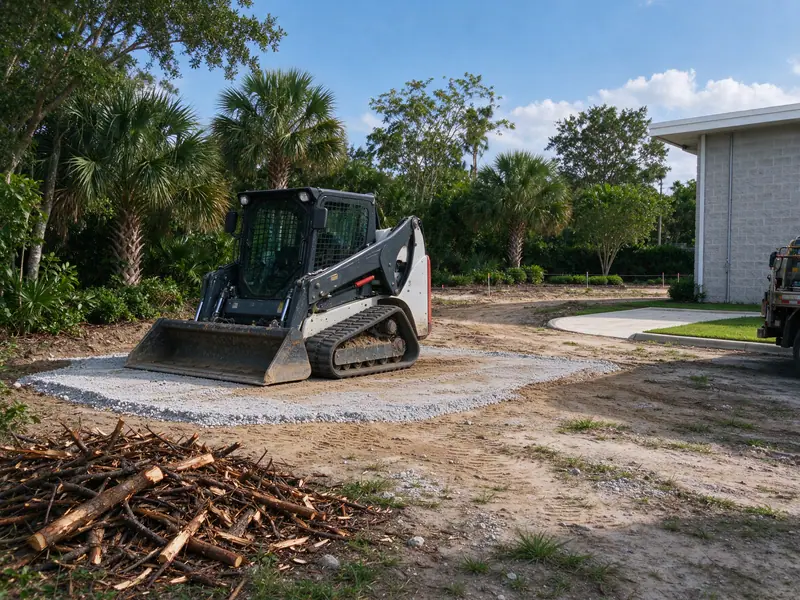
Tracked loader on a gravel staging pad with a separate pile of cut wood on a commercial lot
Clear in defined working areas
Explore commercial land clearing

Tie clearing to the project scope

Glade offers commercial land clearing for owners and project teams preparing a defined work area. Commercial projects can involve several parties, overlapping access needs and staged construction.

  • Begin with the approved limits of disturbance, the current plans and the intended handoff.
  • The clearing scope should be legible to the person coordinating the next contractor.

Separate phases and responsibilities

Vegetation removal, stump extraction, debris transport and final site preparation should be identified individually. Clearing does not silently include demolition, utility work or engineered earthwork.

  • If the project proceeds in phases, distinguish the first mobilization from later areas.
  • Confirm who is responsible for permits, site controls and changes to the approved work boundary.

Plan access around ongoing activity

An occupied neighboring property, restricted entrance or shared delivery route can change the working plan. Identify where equipment and hauling vehicles can enter, turn and stage.

  • The volume and type of vegetation influence material handling, but the usable access may be just as important.
  • Known buried debris and site hazards should be disclosed before the scope is finalized.

Make the handoff measurable

Describe the accepted clearing finish in practical terms: areas opened, vegetation retained, roots addressed and material removed or left on site. Keep unresolved conditions and exclusions visible.

  • A clear record supports comparison between proposals and reduces ambiguity when the site passes to another trade.
  • Additional work discovered during clearing should follow an agreed change process, not an assumption about the original price.

Debris removal

Decide where the material goes.

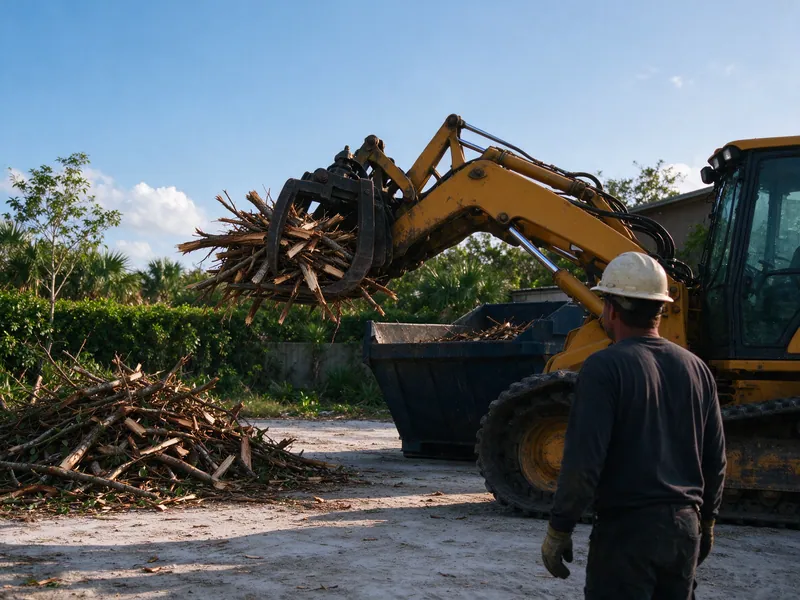
Grapple loader lifting woody debris toward an open-top container
Gather it. Load it. Take it away.
Explore debris removal

Match hauling to the material

Glade offers removal of land-clearing debris within a defined clearing scope. Branches, trunks, root masses and mixed material can require different handling.

  • The first question is what will actually leave the site.
  • A price for vegetation does not automatically include household waste, construction rubble, hazardous material or soil contaminated by unknown substances.

Compare retention with removal

Leaving suitable processed material on the property can be useful for some vegetation-management goals. It can be unsuitable where a builder needs an organic-free work area.

  • Decide whether material will be mulched, gathered or hauled away before comparing estimates.
  • A neat pile is not the same handoff as removal, and its eventual disposal remains a separate responsibility.

Allow room to load and travel

Hauling depends on more than the apparent size of a debris pile. Trucks and loading equipment need access, turning room and a safe place to work.

  • Soft ground, narrow entrances and overhead constraints can change how material is moved.
  • Identify the staging area and avoid blocking neighboring access or covering retained vegetation with stored debris.

Confirm the disposal route

Receiving facilities set their own acceptance conditions and charges. Mixed loads can be treated differently from clean vegetation, so the estimate should explain what is included and what requires separate handling.

  • Do not assume burning is an available substitute for hauling.
  • Local authorization, site conditions and restrictions must be checked.
  • Ask for a clear description of the finish after loading, including any remaining chips, fragments or material excluded from removal.

Choose the finish that fits what comes next.

Surface mulch remains
Roots are a separate scope

Mulch on site

Processes suitable vegetation at the surface. Buried roots and a construction-ready finish are separate questions.

Remove roots and haul

A more extensive scope with excavation, loading and a defined handoff. Confirm backfill and final preparation separately.

Price the scope, not just the acreage.

Lot clearing

Area, vegetation, retained trees and access shape the work.

Forestry mulching

Density, terrain and the requested surface finish change the method.

Stump and root removal

Size, excavation limits, loading and disposal affect the scope.

Describe the required finish before comparing estimates. Compare vegetation, roots, hauling and the handoff before comparing totals.

Prepare your clearing estimate

What do you want to clear?

Tell us how you want to use the land, which features should stay and where the cleared material should go.

Your project

Before the first cut.

Practical clearing decisions, from the first plan to the finished handoff.

Plan the result before choosing equipment

A clearing project starts with what the land needs to do afterward.

Access, vegetation management and a building footprint are different outcomes. Identify the clearing boundary, retained trees and the condition expected at handoff.

Then compare the methods against those requirements. Material left on the surface, roots below it and the route used by equipment all affect the next stage.

Keep approvals, hidden obstacles and disposal responsibilities visible in the scope. The comprehensive planning guide brings those decisions together so the estimate describes a result rather than just a machine and an acreage figure.

Read the guide

Check the parcel’s approval route

Clearing vegetation and removing trees can involve different approval questions.

In North Port, start with the actual parcel and proposed work, rather than the mailing address or what happened on a neighboring property. Tree review does not settle every wildlife, wetland or construction requirement.

Gather the available survey, intended clearing limits and retained-tree information before discussing the route with the relevant authority. A contractor’s ability to operate equipment is not permission to disturb the land.

Resolve the applicable approvals before treating a clearing date as ready to schedule.

Read the guide

A surface finish and a below-ground finish

Forestry mulching processes suitable vegetation into material that remains on the surface.

Grubbing addresses stumps and root masses through a more extensive removal scope. The two methods do not deliver the same result, even when both leave the lot looking open from the street.

Mulching may fit an access or maintenance goal; a planned building area may require a different handoff. Compare retained organic material, excavation, hauling and the work needed afterward.

The appropriate choice follows the intended use and actual site conditions, not the name of the machine.

Read the guide

Grinding is not extraction

Stump grinding reduces woody material within an agreed area and depth.

Extraction removes the stump or root mass through excavation. Ask what remains beneath the surface and how the resulting space will be handled.

Chips left in place, material hauled away and replacement soil are separate parts of the scope. Nearby utilities, retained trees and access limits can change the practical method.

If the area will support a structure or pavement, obtain the next contractor’s requirements before accepting a surface that merely looks finished. Neither method alone establishes engineered ground preparation.

Read the guide

Pause when protected wildlife is involved

A suspected gopher tortoise burrow changes the planning conversation.

Do not disturb it, fill it or try to move an animal yourself. Florida wildlife requirements can affect clearing activity, and qualified assessment may be needed before the project can proceed.

A photograph or a short walk through an overgrown lot cannot establish that protected wildlife is absent. Keep the proposed access route and work boundary available for the review.

Resolve the applicable wildlife conditions before machinery enters the affected area, rather than relying on a general clearing or tree-removal approval.

Read the guide

Water features can change the boundary

Wetlands, drainage features and surface water require more attention than a visual guess about where dry ground begins.

An area that looks ordinary in dry weather may still raise permitting or disturbance questions. Confirm the relevant jurisdiction and assessment needs before clearing, placing fill or changing drainage.

Vegetation removal and earthwork should remain distinct in the project scope. Keep material storage and equipment routes outside unresolved areas until the limits are understood.

A marked work boundary is useful only when it reflects the actual site constraints and any applicable approvals.

Read the guide

Plan beyond the first cut

Brazilian pepper and other persistent growth can return after the visible vegetation is cut.

A clearing estimate should explain the immediate treatment without presenting it as a permanent eradication guarantee. Identify the plant and discuss whether follow-up control is part of the contract or a separate specialist service.

The work may create access for inspection and maintenance, but that does not make every later treatment included. Consider retained vegetation and the intended future use when choosing the method.

The regrowth guide explains why a clean-looking first finish and long-term control are different goals.

Read the guide

Choose where the woody material ends up

Mulch, stockpiles and haul-off are different finishes.

Leaving processed vegetation on site can fit some maintenance goals but may conflict with a builder’s required work area. Piling material transfers a disposal task into the future rather than completing it.

Hauling requires loading access and a receiving facility that accepts the material. Burning should never be assumed to be an available alternative: authorization and site conditions need separate checking.

Compare the destination, included handling and final cleanup in each proposal, especially when roots, soil or mixed debris are present in the load.

Read the guide

A dry-looking surface is not the whole test

Ground conditions influence whether equipment can travel and work without creating unwanted disturbance.

Wet or soft areas can change access, staging and the order of operations. A calendar date or a photograph is not a substitute for assessing the actual route.

Discuss where machinery can turn, where material can be loaded and what conditions would require a pause. Do not treat a different attachment as a universal answer to weak ground.

The wet-ground guide separates vegetation removal from access improvements, drainage work and other tasks that need their own assessment and scope.

Read the guide

Protect the space around retained trees

Keeping a trunk standing is only part of retaining a tree.

Equipment traffic, excavation and stored material can affect the surrounding root area. Identify the trees that stay before choosing travel routes and staging locations.

A narrow gap between trunks does not establish enough working room for a machine. Some situations warrant an arborist’s assessment, particularly when the proposed clearing comes close to valuable retained vegetation.

Record the protected areas and practical limits in the scope. That gives everyone a clearer instruction than a general request to be careful around the trees.

Read the guide

An open lot still has a handoff ahead

After vegetation is cleared, the next contractor may still need roots removed, organic material separated or unsuitable ground assessed.

The clearing finish does not certify final grades, drainage or compaction. Ask the builder to define the required condition for the footprint and access areas before work starts.

Then record which parts belong to the clearing contractor and which remain for the following trade. A shared understanding of that handoff helps prevent assumptions about what an open-looking lot can support.

Keep discovered debris and unresolved site conditions in the completion record.

Read the guide

Compare the same work on every quote

An acreage figure cannot describe the whole clearing job.

Compare the work boundary, vegetation to remove, retained trees, stump treatment and debris destination line by line. Ask whether access preparation, loading, disposal and cleanup are included.

Keep uncertain conditions and change handling visible rather than assuming a lower total covers every obstacle. If one proposal leaves mulch and another removes roots and hauls material away, their prices represent different outcomes.

A useful quote checklist makes those differences explicit so the decision follows the scope you need, not just the smallest number.

Read the guide

Look at the route into the work

Equipment needs more than an opening at the property entrance.

Turning space, overhead clearance, ground conditions and room to load material can all influence the plan. Describe known old wire, posts, dumped material and buried services before the estimate is finalized.

Do not enter unsafe overgrowth to obtain a closer photograph or handle unfamiliar lines yourself. Known obstacles should be separated from conditions that still need assessment.

A realistic access plan explains how the work area is reached and where the equipment and material can move without expanding the agreed clearing boundary.

Read the guide

The finish explains much of the price

Two similar-sized properties can involve very different clearing scopes.

Vegetation density, stump treatment, access and debris handling change the work, while the intended use determines how complete the finish must be. A public labor wage is not a contractor’s billing rate and cannot by itself produce a reliable project price.

Compare the included work before relying on a per-acre shortcut. The cost guide organizes the available local inputs and the factors that need a site-specific estimate, so you can compare estimates for the same boundary, material and handoff.

Read the guide

Keep the opened space useful

Clearing can create access, but maintenance determines how that access changes over time.

Some growth returns from roots or surviving plants, while new vegetation can establish in opened areas. The appropriate follow-up depends on the species, terrain and intended use.

Mowing, repeated brush cutting and specialist invasive-plant control are different tasks. Ask which follow-up work, if any, is included in the initial agreement.

Watch for changes from safe, accessible locations and address problems through an appropriate maintenance plan. A one-time clearing scope should not imply that the land will remain unchanged indefinitely.

Read the guide

North Port and nearby communities.

North Port

For North Port Estates, Warm Mineral Springs and Wellen Park, identify the parcel and proposed work before choosing the approval route.

Port Charlotte · Punta Gorda

Use the parcel location to check the applicable city or county review. Include it when requesting an estimate.

Port Charlotte clearing Punta Gorda clearing

Make the next conversation useful.

Compare the clearing planning tools

Clearing scope planner

Organize area, vegetation, roots, access and debris details. Prepare the details that shape the work.

Method assessment

Compare likely methods against your intended use. This is planning guidance, not site clearance.

A clearer scope from start to finish.

Describe

Share the parcel and the purpose.

Assess

Resolve access and site conditions.

Define

Agree on limits and material handling.

Review

Compare the finish with the scope.

Questions worth settling early.

Does clearing include removing roots?

Only when root removal is included in the agreed scope. Mulching, stump grinding and grubbing leave different finishes.

Can I keep selected trees?

Selected trees can form part of the clearing plan. Identify retained vegetation and the access restrictions around it before work is scoped.

Is a cleared lot ready to build on?

Not necessarily. Building preparation can require separate assessment of roots, soil, drainage, fill and compaction.

Can material stay on the property?

That depends on the intended use and applicable restrictions. Agree whether the finish includes mulch, stockpiles or hauling.

What should I send with an estimate request?

Include the parcel location, intended use, approximate clearing area and photographs taken from safe access points.

Can the entire job be priced from photos?

Photos help explain the request, but they may not show hidden debris, soft ground, access limits or below-ground conditions.

Is the old fence the property line?

Do not assume so. Resolve the boundary and any easement permissions before defining the clearing corridor.

Will brush grow back?

Some vegetation can regrow after cutting. The species and the finish influence the maintenance needed afterward.

Is burning included instead of hauling?

Do not assume burning is available. Authorization and site restrictions must be checked separately.

Does a neighboring cleared lot mean mine can be cleared?

No. Approval and site conditions must be resolved for the actual parcel and proposed scope.

What would you like to open up?

Start with the parcel location, your intended use and a few safe photographs.

Get an Estimate
Call (941) 394-1133Get an Estimate