Do North Port tree rules apply to my Port Charlotte lot?
Do not transfer those rules automatically. Confirm the parcel’s jurisdiction and Charlotte County requirements for the proposed work.
Glade North Port Land Clearing
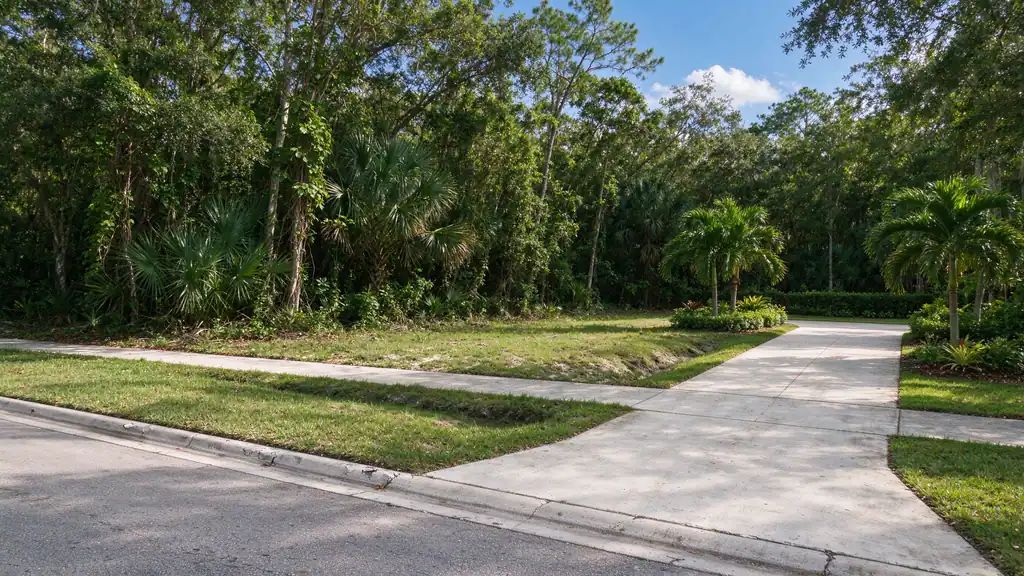
A vacant lot in Port Charlotte can look straightforward from the street and still leave you with several clearing decisions. You may need access to inspect it, an opening for a future home, or vegetation removed while keeping shade and privacy. The useful starting point is your intended use, not simply the size of the parcel.
Glade offers land clearing in Port Charlotte, Florida, including brush clearing, selective vegetation removal, forestry mulching and specified stump and debris work. Describe the condition you need afterward so the estimate can distinguish a maintained opening from preparation for another contractor.
Dense vegetation can make it difficult to understand the ground, identify an old fence or show a prospective builder the site. A defined access corridor may be enough for the first phase. Agree on the width, turning area and material finish rather than clearing additional land simply to make the property look open.
Ask the builder what needs to be removed from the intended footprint and access route. Roots, buried organic material and remaining stumps can matter to the next stage. Vegetation removal does not include foundation excavation, imported fill or engineered compaction unless the scope expressly adds those services.
Selective clearing can open usable space while retaining chosen trees. Mark those trees clearly and consider their surrounding roots when planning equipment travel. A mulched surface may serve access and maintenance goals, while a future lawn requires a different conversation about roots, chips and surface preparation.
Port Charlotte is served by Charlotte County’s permitting framework. A clearing proposal for a Port Charlotte parcel should not simply carry over North Port’s rules because the communities are nearby. Start with the parcel identification and the proposed work, then confirm the applicable county route.
Charlotte County publishes a residential tree permit resource. Use it to identify the review questions before scheduling removal. A property address alone does not explain the trees involved, the limits of disturbance or the supporting plans that may be needed.
The county also maintains a scrub-jay conservation plan. The practical consequence for a landowner is to resolve whether habitat requirements affect the parcel before clearing begins. Do not assume that another permit, a neighboring cleared lot or a lack of visible birds settles that question.
These are separate planning checks, not reasons to clear everything or abandon the project. Knowing the applicable limits can help you choose a smaller opening, retain vegetation or coordinate the clearing with the next permitted phase.
The entrance can matter as much as the area you want cleared. Think about the narrowest point, overhead clearance, ground conditions and space for loading. If material must leave, the proposal needs to account for hauling access as well as the machine doing the cutting.
Do not assume an existing driveway edge, roadside drainage feature or neighboring entrance can carry equipment. Share any plans and known restrictions. The proposed route should stay within authorized access and avoid creating a new drainage problem while solving a vegetation problem.
Where a parcel is reached from the US 41 corridor, Kings Highway or local residential streets, the final approach still needs to be considered at property level. A major route nearby does not establish working room at the gate. Describe the actual entrance rather than treating the neighborhood name as an access assessment.
| Your priority | Scope to discuss | Question to settle |
|---|---|---|
| Open access with material retained | Mulching or defined brush cutting | What remains on the surface? |
| Remove woody material from the lot | Cutting, gathering and hauling | Are stumps and root masses included? |
| Prepare an identified construction area | Clearing tied to the builder’s requirements | Who handles the work after root removal? |
Different areas of the same lot can receive different finishes. You may want a retained buffer near the boundary, a mulched access route and more extensive removal within the planned footprint. Mark those areas so a general description of lot clearing does not become an assumption about every square foot.
Our lot-clearing page explains the differences in more detail. The goal is to compare proposals for the same result, with exclusions visible, rather than choosing between prices that describe different work.
Old wire, dumped material and buried debris can become visible only after growth is removed. Tell the contractor about known obstacles and ask how newly discovered conditions will be handled. Household waste, demolition debris and potentially hazardous material are not automatically included in vegetation removal.
Water and soft ground also need attention. A surface that looks dry in one photograph may not support the same travel route after rain. Where drainage features, wetlands or standing water are involved, establish the appropriate assessment before cutting, filling or changing the ground.
A suspected gopher tortoise burrow should remain undisturbed while qualified guidance is obtained. Habitat questions need their own resolution. Clearing equipment and a general tree-removal authorization do not replace wildlife assessment or any required specialist involvement.
The principal cost drivers are the area, vegetation, tree and stump sizes, access, material handling and required finish. A narrow opening through dense growth can require different work from a broad area of lighter vegetation. Acreage alone cannot show that difference.
No verified Port Charlotte project-price band is available for publication here. Use the cost guide to prepare a comparable scope instead of treating a generic online number as a quote. Permit-related costs, surveys and specialist work should be identified separately where applicable.
When hauling is included, specify the material and destination requirements. A vegetation-only load is different from mixed debris. Ask whether loading, transport, receiving charges and remaining surface material are covered, so the apparent clearing price does not leave an unresolved disposal task.
Begin by describing the result and marking the intended area on available plans. Next, resolve permission, retention and access questions. The written scope can then identify the cutting method, any below-ground work and what happens to the material.
At the handoff, compare the actual finish with that written description. If another trade follows, its requirements should already be part of the discussion. For a maintenance opening, decide what ongoing vegetation management will be needed rather than expecting one clearing visit to prevent all regrowth.
Contact Glade with the property location, approximate area and intended use. Safe photographs of the entrance and vegetation help explain your question. Include the builder’s requirements if construction is planned, and mention any trees you want retained. That information helps focus the discussion on the work you need and the conditions still to resolve.
Do not transfer those rules automatically. Confirm the parcel’s jurisdiction and Charlotte County requirements for the proposed work.
A reliable total needs the actual vegetation, roots, access and disposal scope. No verified local project-price band is published here; compare written estimates for the same finish.
No. Check the parcel through the applicable county process. A mailing address or casual observation does not settle habitat conditions.
Yes. The clearing machine and hauling vehicle can have different access needs. Describe the entrance, turning area and loading space.
Include the retained area in the scope and discuss equipment movement around it. Resolve the boundary itself before cutting.
Vegetation removal is not drainage design or installation. Standing water and drainage features need appropriate assessment before changing ground levels or placing material.
Do not assume identical conditions. Water features and the proposed disturbance may introduce separate assessment or authorization questions.
Do not assume it is included. Material origin, type, receiving-facility acceptance and the agreed transport scope need to be clarified.
Send available plans, the intended result, retained-tree instructions and safe existing photographs. These help communicate scope but do not replace a property assessment.
Discuss the areas and handoffs separately, including how access and material storage will work between phases. Do not assume later mobilizations are included.
Discuss a Port Charlotte clearing project
Share the property location, intended use and known access constraints.