Does my Punta Gorda mailing address mean the city reviews my clearing?
No. Confirm whether the parcel lies inside city limits. A mailing address alone does not determine the applicable city or county process.
Glade North Port Land Clearing
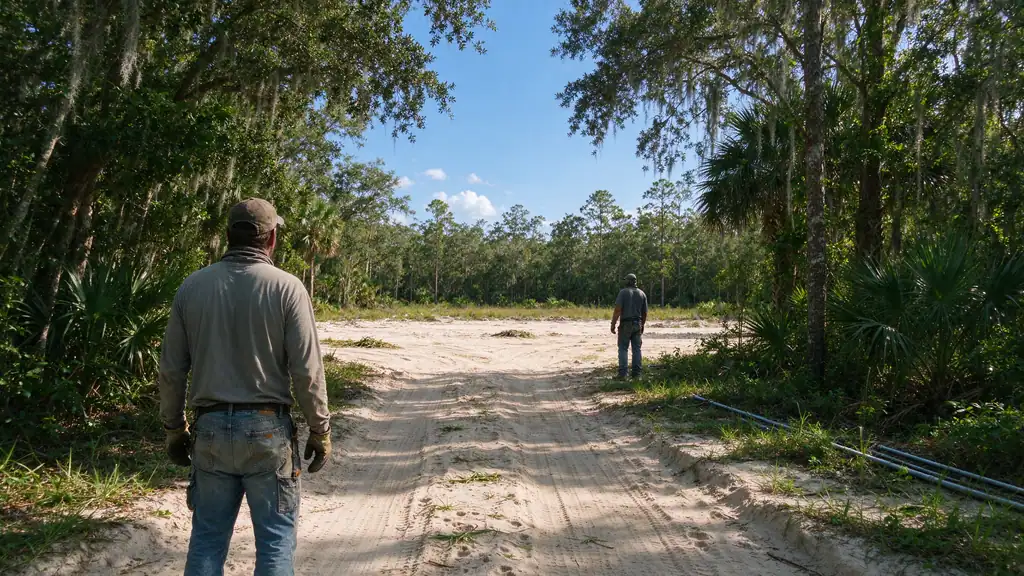
Clearing a Punta Gorda property starts with two questions: what needs to happen on the land, and which jurisdiction reviews that work? A street address can help locate the parcel, but the words Punta Gorda on the mailing address do not establish that the property sits inside city limits.
Glade offers land clearing for Punta Gorda properties, with scope based on the vegetation, access and finish you need. You might want an opening for maintenance, space to inspect a lot or a defined area prepared for a builder. Those outcomes call for different decisions about trees, roots and material handling.
Start with the parcel identification and a boundary reference. If the parcel is inside Punta Gorda city limits, use the city’s tree-removal process. If it has a Punta Gorda mailing address but lies outside the city, confirm the applicable Charlotte County route. Do not transfer North Port rules to either situation because the job is nearby.
This distinction matters before comparing estimates. A proposal may assume that tree authorization has already been handled, while the owner expects the clearing contractor to take care of it. Ask who identifies the applicable review, who prepares the supporting information and who confirms authorization before any affected work starts.
The City of Punta Gorda tree-removal permit resource is the starting reference for city parcels. Its form identifies native and approved non-native trees measuring 12 inches or larger in diameter at breast height as requiring approved removal permission, subject to the applicable rules and exemptions. Confirm the current requirements for the specific trees and project.
A measurement or species question should be resolved through the appropriate review rather than guessed from a photograph. A large canopy does not establish trunk diameter. Likewise, a small visible trunk does not establish that every other land-disturbance or habitat question has been settled.
The city form directs projects involving removal of more than three trees to Urban Design. Its simple online request is therefore not a substitute for discussing a larger clearing proposal with the city. The form also describes an owner-only request and supporting photographs or documentation.
For a wooded lot, prepare a clear explanation of the intended work before making that contact. Identify the proposed opening, retained areas and whether construction is planned. Existing plans can help explain the proposal, but mark what is preliminary and what has already been approved. This avoids treating a concept sketch as permission to clear.
If the project changes after review, pause to confirm how the revised scope should be handled. Expanding the opening, removing additional trees or changing access can alter the work being considered. An estimate should remain tied to the authorized scope rather than relying on a broad instruction to clear the property.
A defined corridor or selectively opened area may solve the immediate problem without removing every tree. Discuss brush clearing or forestry mulching where appropriate. Explain whether you expect material to remain on the surface and whether stumps can remain outside travel areas.
Ask the builder what must be removed from the footprint and access route. A cleared surface can still contain roots and organic material that the next contractor needs addressed. Construction-site clearing should have a defined handoff; it does not automatically include grading, imported fill, compaction or drainage installation.
Point out which vegetation provides shade, screening or another benefit. Include the surrounding protection area in the access discussion. Driving around a retained trunk is not the same as protecting its roots. Selective clearing needs practical work limits that remain understandable when machinery and material arrive.
The machine removing vegetation and the vehicle hauling it away may need different amounts of room. Describe the narrowest part of the entrance, any turns, overhead restrictions and the area available for loading. A good view of the lot from the road does not prove that hauling access is adequate.
Where a driveway, culvert, drainage feature or neighboring property affects the approach, identify that constraint before work is priced. Do not assume that equipment can cross an adjacent parcel or that an existing surface can support the intended loads. Access permission and physical suitability are separate questions.
Material handling should be specific. Mulching leaves processed vegetation on site. Cutting and hauling moves agreed material away. Root extraction can create soil mixed with woody material. These are different finishes, with different handling needs. Tell the contractor which result matters most so the method can be evaluated against it.
| Decision | Detail to provide | Why it matters |
|---|---|---|
| Retain or remove material | Intended use of the cleared space | Surface chips may suit one use and conflict with another |
| Remove stumps or roots | Builder’s requirements or future planting plan | Cutting visible vegetation does not define below-ground work |
| Load and haul | Entrance and loading-area photographs | Hauling may require a different route from clearing |
| Protect retained areas | Plans, markings and access restrictions | Work limits must include movement and material storage |
A tree-removal decision does not settle every environmental issue. If the parcel contains water features, suspected wetlands or signs of protected wildlife, identify the appropriate assessment before disturbing the area. Do not interpret an apparently dry patch or an absence of visible animals as clearance to proceed.
Our guides to clearing near wetlands and gopher tortoises before clearing explain the planning questions. Keep suspected sensitive areas undisturbed while the relevant guidance is obtained. The clearing scope should state any areas excluded from work and the conditions for reconsidering them.
Soft ground can also affect scheduling and equipment access. Explain known standing water or areas that remain wet after rain. A photograph is useful context, but it cannot confirm bearing conditions throughout the proposed travel route. Discuss how unsuitable ground or newly exposed obstacles would change the work.
There is no verified local project-price band published here. A useful estimate considers the actual work area, vegetation, roots, access, retained trees and disposal requirements. Acreage by itself cannot explain whether the task is light surface clearing or more extensive removal within a building footprint.
Use a written scope to compare proposals. Ask whether gathering, loading, transport and receiving charges are included when material leaves the property. Identify tree review, surveys and specialist services separately where applicable. Ask how buried debris or old fencing discovered during work will be addressed before additional work is authorized.
The clearing quote checklist helps organize those questions. The objective is a clear handoff, including what remains on site, what areas are excluded and what another contractor will handle. A lower total is difficult to evaluate when the proposed finishes differ.
When you contact Glade, include the parcel location, intended use and approximate work area. Send available plans and safe photographs of the entrance and vegetation. Mention retained trees, known debris, water features and any city or county correspondence already received.
You do not need to solve every technical question before getting in touch. Distinguish what you know from what still needs assessment. That makes it easier to discuss the right clearing scope without promising a final price, regulatory outcome or construction-ready finish from incomplete information.
No. Confirm whether the parcel lies inside city limits. A mailing address alone does not determine the applicable city or county process.
The city tree-removal form directs those projects to Urban Design. Confirm the appropriate route before treating a larger clearing job as a simple online request.
The form identifies native and approved non-native trees 12 inches or larger in diameter at breast height. Verify applicable exemptions and the project requirements with the city.
Do not assume an approval applies to another property or jurisdiction. Identify the actual parcel and applicable review before work.
Only when the written scope includes it. Describe the intended finish and any builder requirements so stump cutting, grinding and extraction are not confused.
Compare the same boundaries, vegetation, root finish, access and disposal scope. No verified local project-price band is published here.
Discuss the intended buffer, property boundary and equipment access together. Retention needs to be included in the agreed scope and applicable review.
Identify that constraint before choosing a removal-and-haul finish. Access arrangements, loading locations or the proposed scope may need further assessment.
Do not assume that it does. Protected wildlife and habitat questions need their own appropriate review before affected work.
Provide available plans, parcel details, intended use and existing safe photographs. Separate confirmed information from assumptions and discuss how an on-site assessment will be arranged.
Discuss a Punta Gorda clearing project
Share the property location, intended use and known access constraints.